Venomous
The Black Pakistani Cobra
Naja naja karachiensis
FamilyElapidae
GenusNaja
SpeciesNaja naja karachiensis
Common names• The Black Pakistan Cobra • B-Pak Cobra • Black Cobra • Pakistani Black Cobra
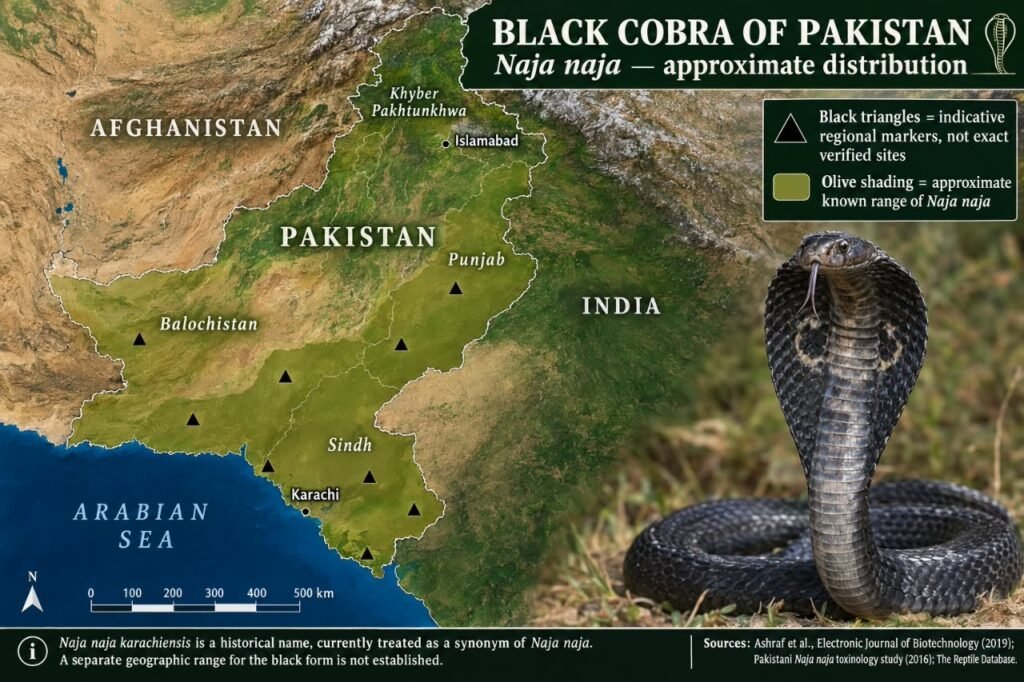
Distribution• South Asia • Pakistan • Sindh • Punjab • Northern & Eastern Regions
HabitatForest, Grassland, Agricultural land, Desert, Urban / peri-urban areas
ConservationData Deficient (DD)
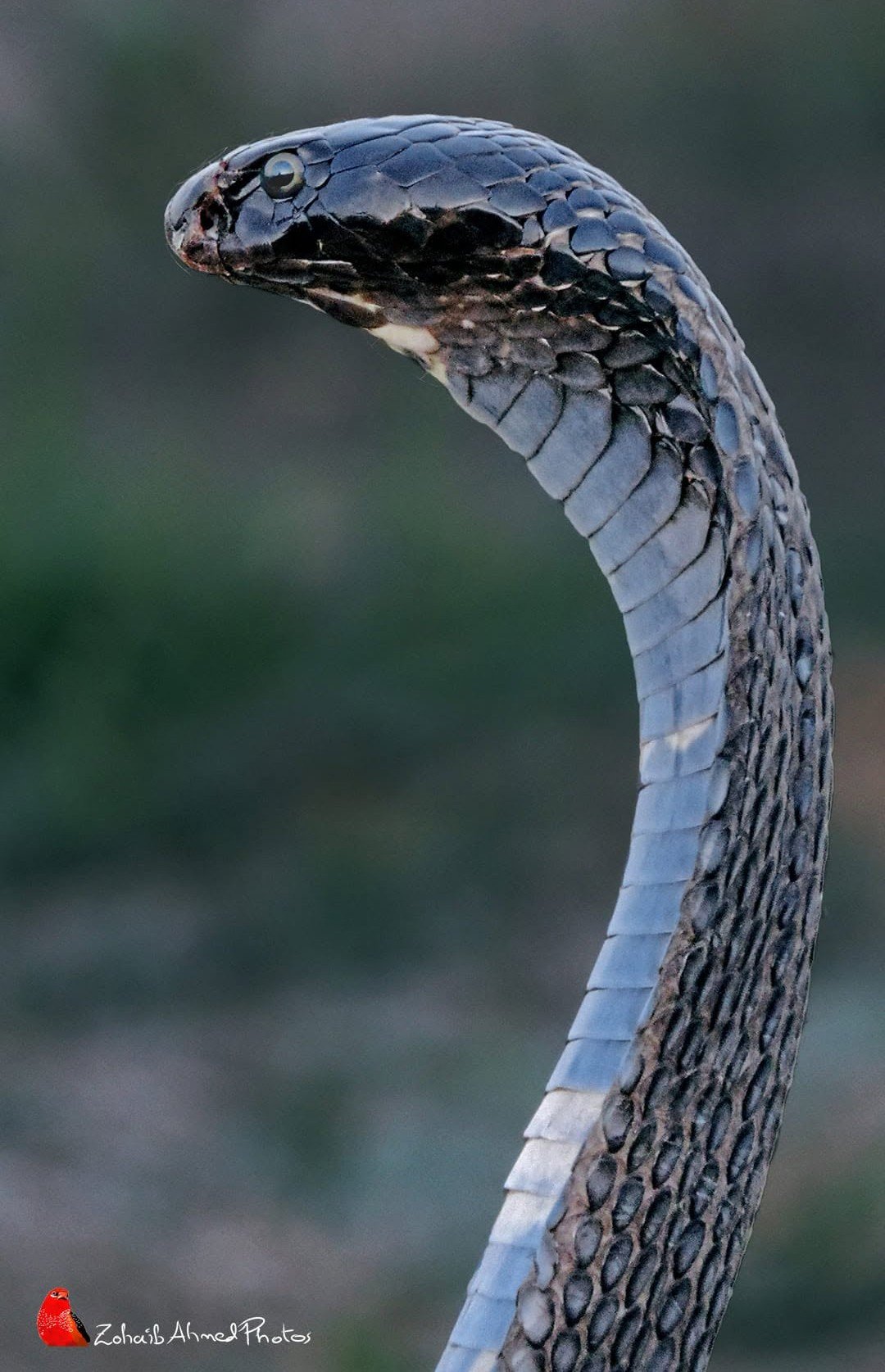
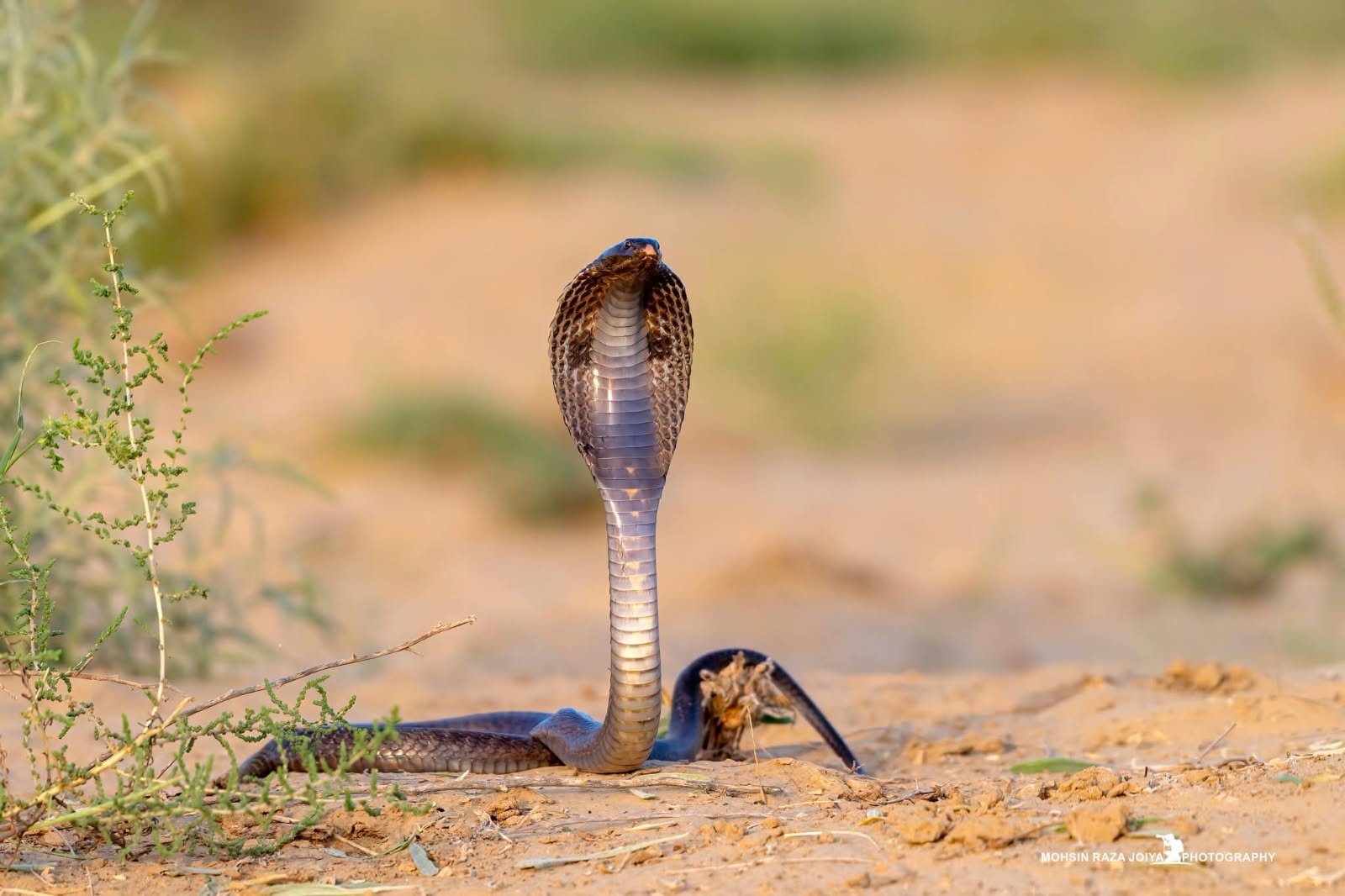
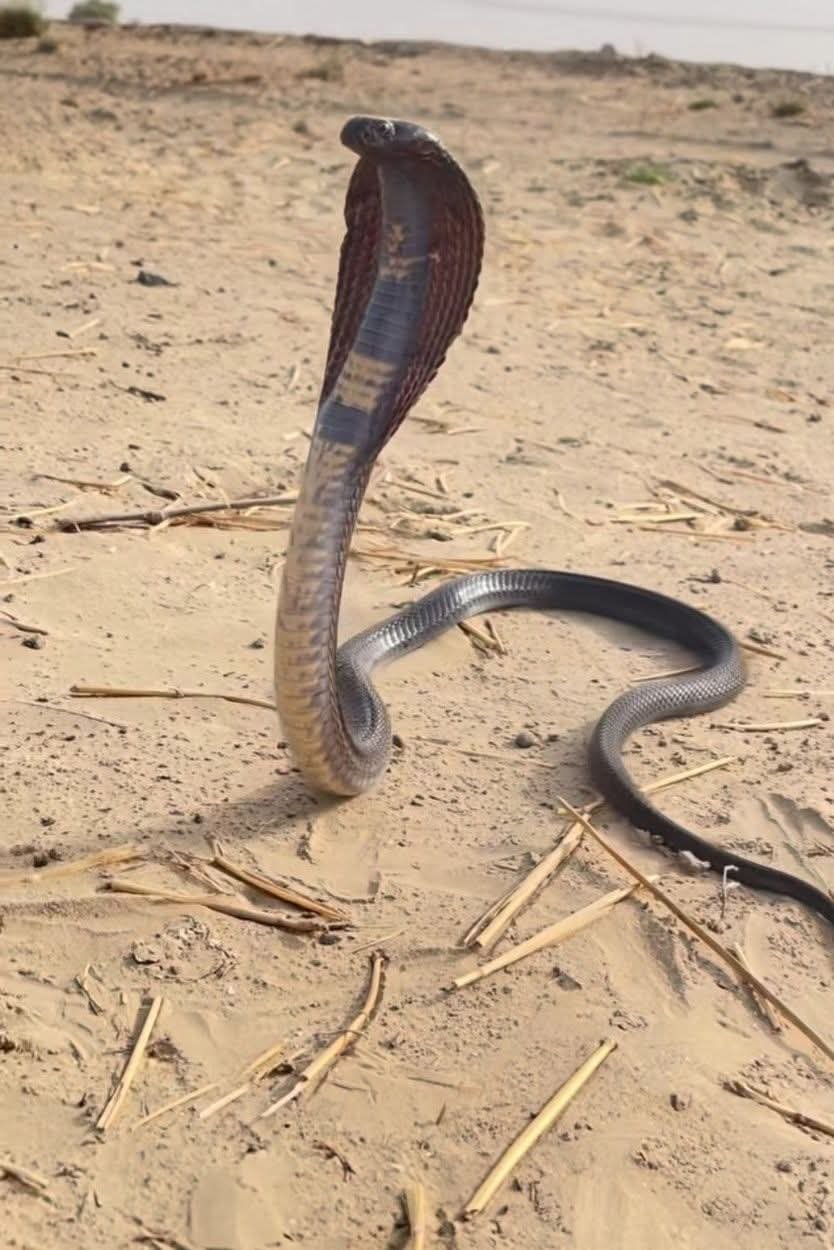
Snake Image Gallery
Identification
How to Identify
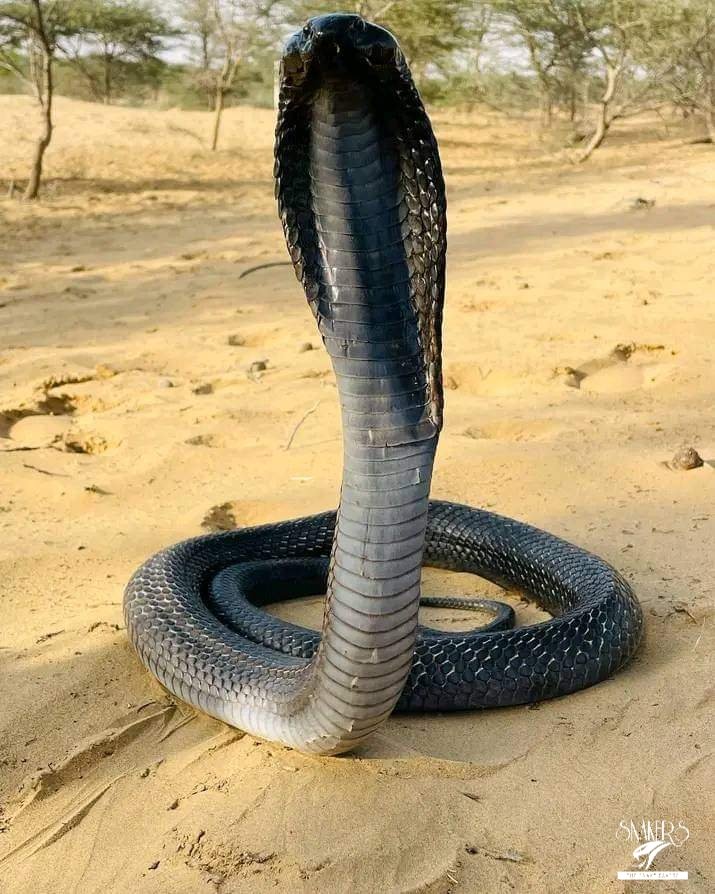
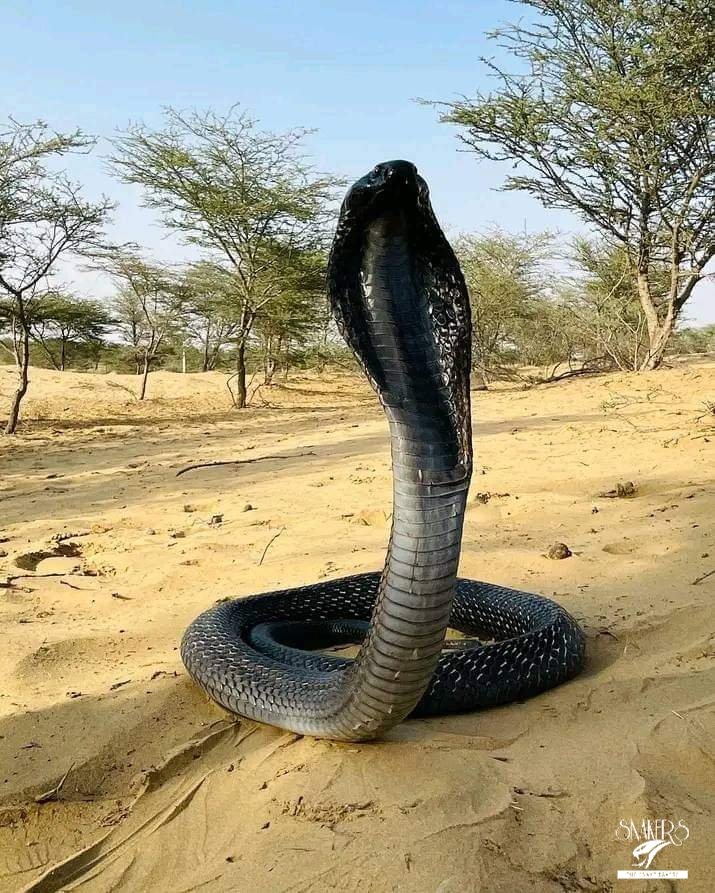
- Body colorUnlike the typical light brown or yellow-hued Spectacled Cobras found across India, this variant is famous for being almost entirely jet-black or dark charcoal gray. • Coloration: Jet-black or dark coloration matching the rest of the dark/melanistic body (sometimes with a slightly darker or matching black tip).
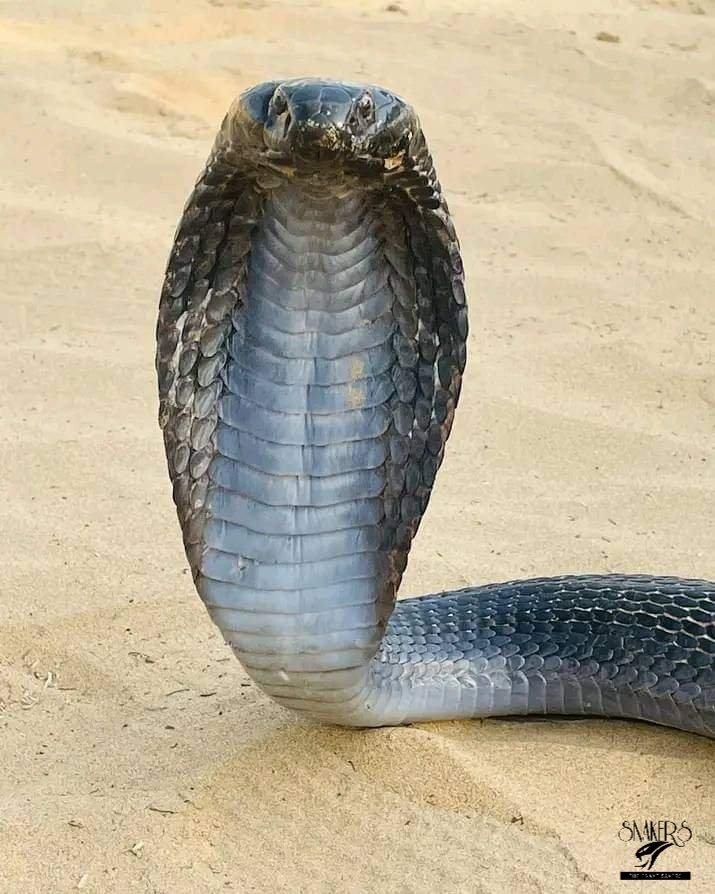
- Head shapeThe Pakistani Black Cobra (Naja naja karachiensis, now scientifically classified broadly under Naja naja) possesses a distinctly elliptical, flattened, and relatively short head.
- Scale pattern• Dorsal Scale Color: Adult Naja naja karachiensis (commonly known as the Pakistani black cobra) are typically uniformly jet-black (melanistic) on top. • Juvenile vs. Adult Change (Ontogenetic Shift): Young juveniles in southern Pakistan can be grey and may or may not show a hood mark, but they turn pitch black as they mature into adults. • Hood Mark: Unlike standard spectacled Indian cobras that have prominent binocellate (spectacle) markings on the hood, adults of this subspecies often lack clear or visible dorsal hood patterns due to their uniform black coloration. • Ventral and Throat Scales: The underside outside of the throat region is usually light, and throat patterns can feature a light area followed by dark banding (about 4 to 7 ventral scales wide) or varying degrees of mottling. • Scale Texture: The body is covered in smooth, oblique scales characteristic of the species, with smooth, glossy, iridescent black finishes in adult specimens.
- Eye characteristicsThe eyes are medium-sized and alert with completely round pupils
- Neck markingsConnection to Neck: At rest, the head is not highly distinct or well-defined from the neck, which sets it apart from many other venomous snakes (like vipers) that have sharply triangular, distinct heads.
- Average lengthThe average length of Naja naja karachiensis (the Pakistani black cobra or Indian cobra variant) is about 1.5 to 1.9 meters (4.9 to 6.2 feet), with some larger individuals or maximum lengths reaching up to 2.2 to 2.4 meters (7.2 to 7.9 feet). • Average Length: 1.5 to 1.9 meters (4.9 to 6.2 feet). • Maximum Length: Up to 2.2 to 2.4 meters (7.2 to 7.9 feet). • Hatchling Length: Around 20 to 30 cm (8 to 12 inches) at birth.
- Tail characteristicsThe tail of Naja naja (commonly including the regional black morph formerly classified as Naja naja karachiensis, the Pakistani Black Cobra) shares the standard morphological traits of the Indian cobra: • Subcaudals: Divided (in a double row) on the undersurface of the tail, with standard counts typically ranging from 48 to 67 subcaudals across Naja naja populations. • Proportions: Generally tapers to a pointed tip. As is typical in snakes, males often have a slightly longer post-cloacal tail length relative to their total body size compared to females, though individual variation is high.
- Distinctive markings• Often recognized by its dark or black-scaled coloration in Pakistan, though it belongs to the broader Naja naja (Indian cobra) species complex.
Identification Warning
Important: Snake identification should not be based on a single visual characteristic. Do not handle an unidentified snake.
Taxonomy
| Classification | Details |
|---|---|
| Kingdom | Animalia |
| Phylum | Chordata |
| Class | Reptilia |
| Order | Squamata |
| Family | Elapidae |
| Genus | Naja |
| Species | Naja naja karachiensis |
Venom Information
Venom Status
Venomous
Medical significance depends on species, bite circumstances, venom dose and treatment availability.
Venom Type
- NeurotoxicNeurotoxicity: Progressive skeletal muscle weakness, ptosis, and respiratory paralysis.
- CytotoxicCytotoxicity & Local Injury: Severe local pain, intense edema, blistering, and tissue necrosis at the bite site.
Venom Delivery
- Front FangedAn adult Naja naja (including the Naja naja karachiensis or Black Pakistani cobra variant) can deliver more than 50 mg of crude venom in a single bite, with a median lethal dose (LD₅₀) of roughly 1.2 mg/kg via intramuscular injection.
Medical Importance
• Venom Type: Highly neurotoxic and cardiotoxic. A bite can cause rapid muscle paralysis and respiratory failure.
• Medical Importance: It is medically highly significant in Pakistan. Interestingly, biochemical studies note that while it is genetically the same species as the Indian cobra, regional diet and environmental factors cause slight variations in its venom composition.
Physical Characteristics
Size
- Average length
- The average length of Naja naja karachiensis (the Pakistani black cobra or Indian cobra variant) is about 1.5 to 1.9 meters (4.9 to 6.2 feet), with some larger individuals or maximum lengths reaching up to 2.2 to 2.4 meters (7.2 to 7.9 feet). • Average Length: 1.5 to 1.9 meters (4.9 to 6.2 feet). • Maximum Length: Up to 2.2 to 2.4 meters (7.2 to 7.9 feet). • Hatchling Length: Around 20 to 30 cm (8 to 12 inches) at birth.
Appearance
- Body color
- Unlike the typical light brown or yellow-hued Spectacled Cobras found across India, this variant is famous for being almost entirely jet-black or dark charcoal gray. • Coloration: Jet-black or dark coloration matching the rest of the dark/melanistic body (sometimes with a slightly darker or matching black tip).
- Head
- The Pakistani Black Cobra (Naja naja karachiensis, now scientifically classified broadly under Naja naja) possesses a distinctly elliptical, flattened, and relatively short head.
- Scales
- • Dorsal Scale Color: Adult Naja naja karachiensis (commonly known as the Pakistani black cobra) are typically uniformly jet-black (melanistic) on top. • Juvenile vs. Adult Change (Ontogenetic Shift): Young juveniles in southern Pakistan can be grey and may or may not show a hood mark, but they turn pitch black as they mature into adults. • Hood Mark: Unlike standard spectacled Indian cobras that have prominent binocellate (spectacle) markings on the hood, adults of this subspecies often lack clear or visible dorsal hood patterns due to their uniform black coloration. • Ventral and Throat Scales: The underside outside of the throat region is usually light, and throat patterns can feature a light area followed by dark banding (about 4 to 7 ventral scales wide) or varying degrees of mottling. • Scale Texture: The body is covered in smooth, oblique scales characteristic of the species, with smooth, glossy, iridescent black finishes in adult specimens.
- Eyes
- The eyes are medium-sized and alert with completely round pupils
- Tail
- The tail of Naja naja (commonly including the regional black morph formerly classified as Naja naja karachiensis, the Pakistani Black Cobra) shares the standard morphological traits of the Indian cobra: • Subcaudals: Divided (in a double row) on the undersurface of the tail, with standard counts typically ranging from 48 to 67 subcaudals across Naja naja populations. • Proportions: Generally tapers to a pointed tip. As is typical in snakes, males often have a slightly longer post-cloacal tail length relative to their total body size compared to females, though individual variation is high.
Habitat & Distribution
Habitat
- Forest
- Grassland
- Agricultural land
- Desert
- Urban / peri-urban areas
Distribution Map
Human Interaction & Safety
If Encountered
- Keep a safe distance.
- Do not attempt to catch or kill the snake.
- Keep children and pets away.
- Contact a trained local wildlife / snake-rescue service where available.
Snakebite Information
If someone is bitten, seek emergency medical care immediately.
Do not attempt to suck out venom, cut the wound, or apply a tourniquet unless specifically directed by medical professionals.
Conservation
IUCN Status
Data Deficient (DD)Population Trend
Decreasing
Main Threats
- Habitat loss
- Human persecution
- Road mortality
- Illegal trade / collection
- Climate change
- Pollution / pesticides
Local Names
Common English NameThe Black Pakistani Cobra
Scientific NameNaja naja karachiensis
Urdu Nameکالا ناگ / شیش ناگ / پھنیر / کالا کوبرا
Pashto Nameخشہ مار / ښامار / چمچہ مار
Sindhi Nameڪارِيھَرُ / ڪارو نانگ
Punjabiپھنیر سپ / کھڑپا
Other local namesسیاہ مار / چھجلہپ / ککڑ / مُشکی - 𝐂𝐡𝐚𝐣𝐥𝐞𝐡𝐚𝐩 - 𝐏𝐡𝐚𝐧𝐢𝐚𝐫 - 𝐊𝐚𝐤𝐚𝐫 - 𝐌𝐮𝐬𝐡𝐤𝐢