
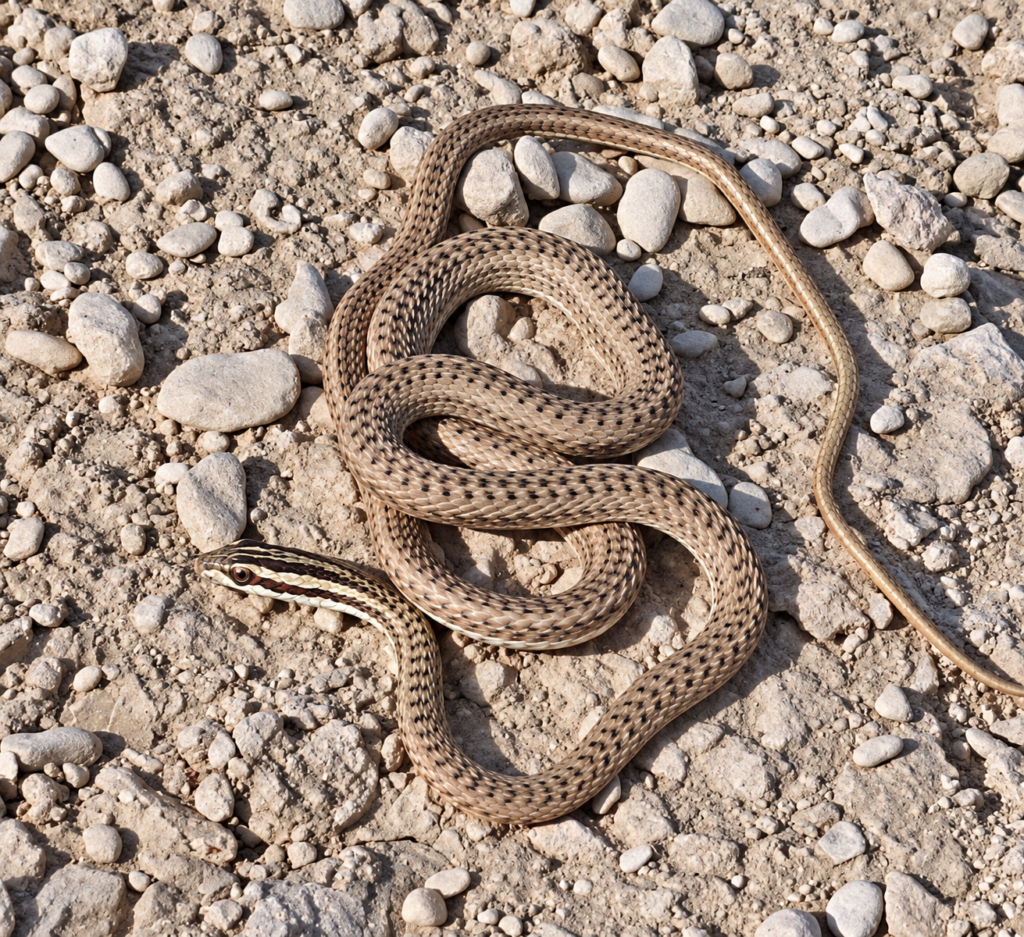
Steppe Ribbon Snake
Snake Image Gallery
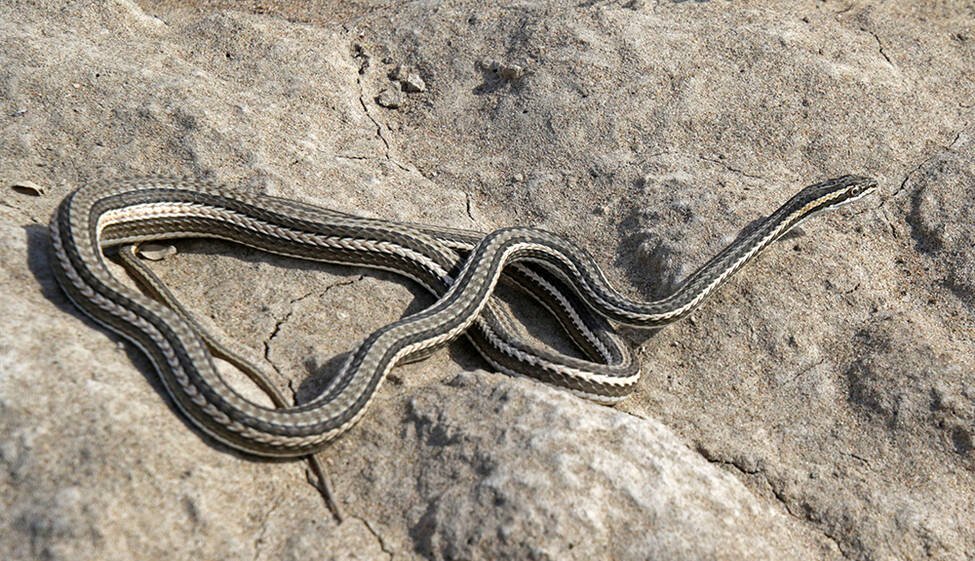
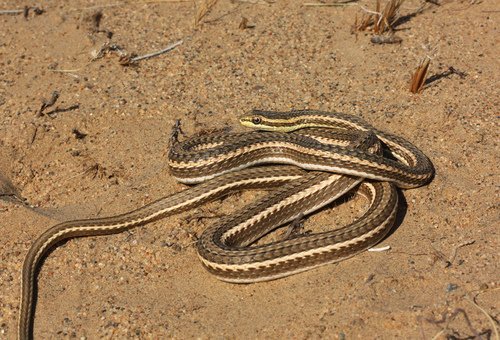
Identification
How to Identify
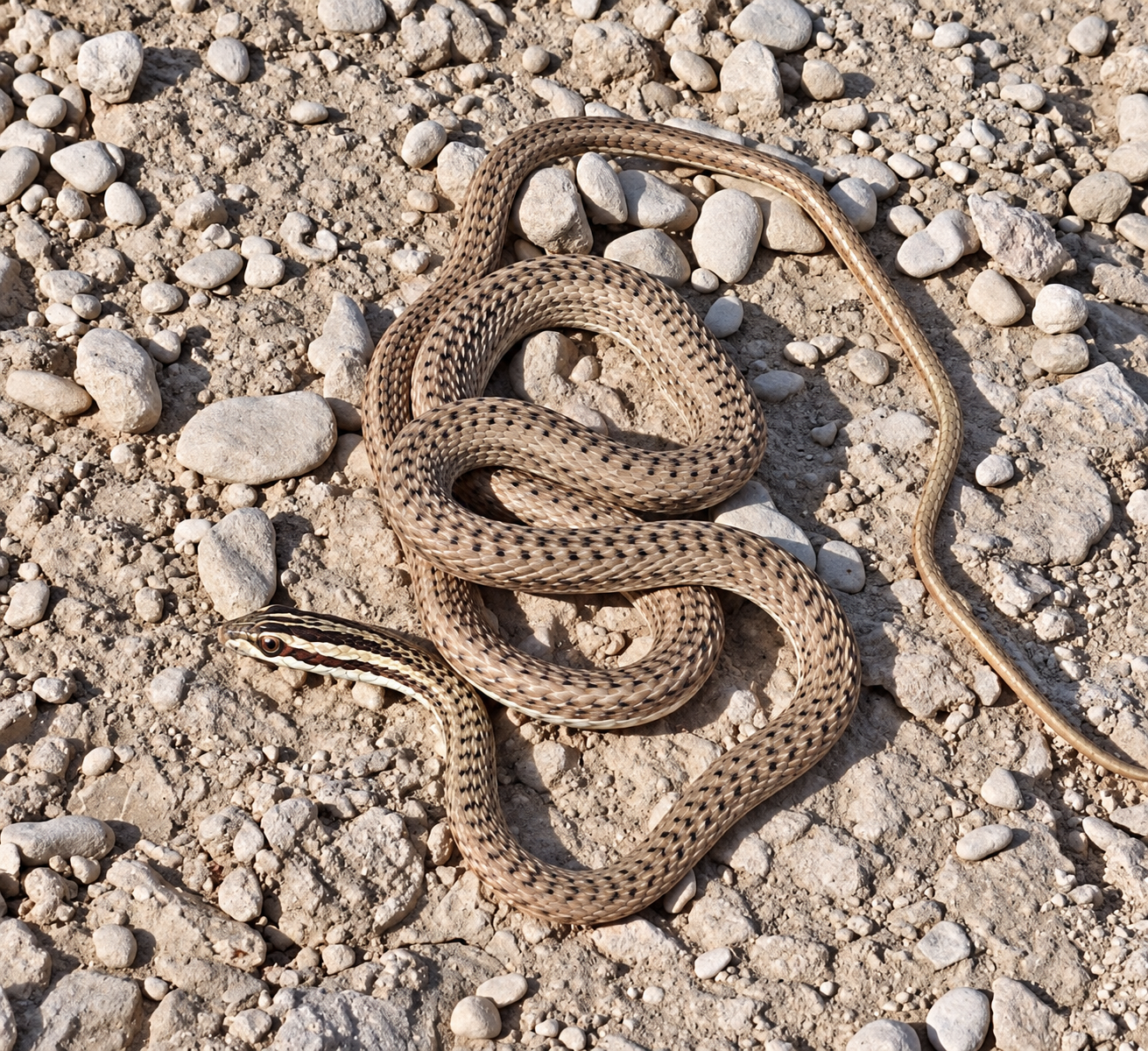
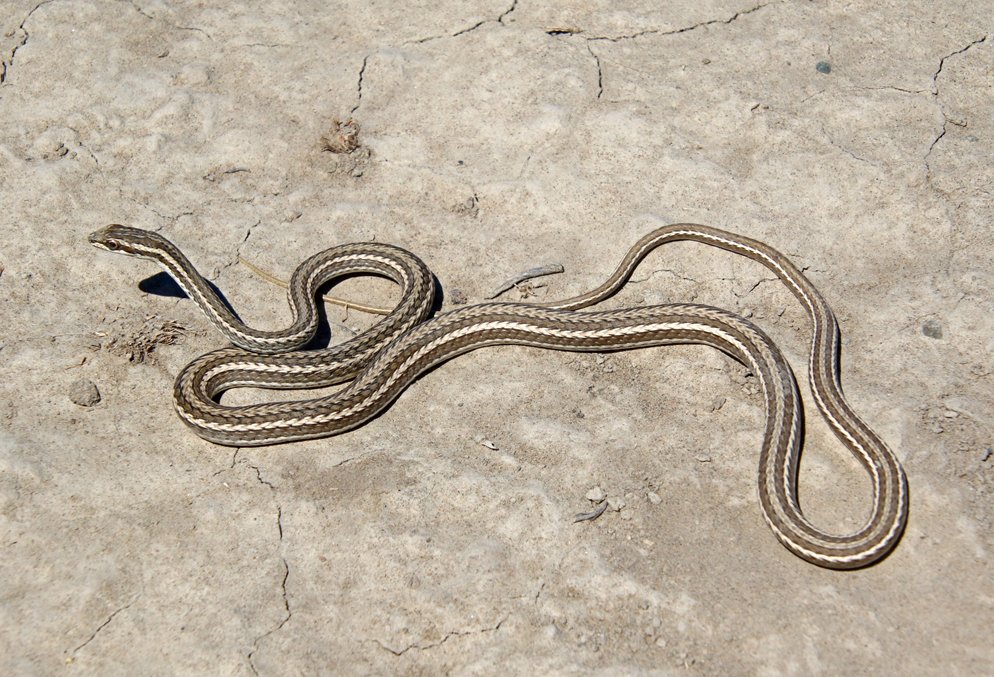
- Body colorOlive-gray, sandy, or brownish-gray, with scale edges slightly lighter than the middle
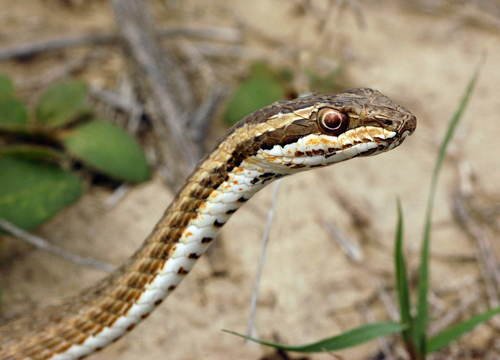
- Head shapeDistinctly narrow, elongated, and only slightly separated from the neck
- Scale patternThere are 17 smooth scales around the middle of the body
- Eye characteristicsThe pupil is large
- Neck markingsThe stripes begin on the head shields
- Average length91 cm
- Tail characteristicsRelative Length: Unlike many other species within the sand-snake genus Psammophis that boast exceptionally elongated tails, the tail of P. lineolatus is categorized as proportionally short.
- Distinctive markingsDorsal Stripes: The defining feature consists of four dark longitudinal stripes with distinct black edges that run down the entire length of its body. These stripes begin on the head shields and extend backward. In some individuals, these stripes can be narrow, faint, or broken into dotted lines, while rare specimens might lack them entirely.
Identification Warning
Taxonomy
| Classification | Details |
|---|---|
| Kingdom | Animalia |
| Phylum | Chordata |
| Class | Reptilia |
| Order | Squamata |
| Family | Psammophiidae |
| Genus | Psammophis |
| Species | Lineolatus |
Physical Characteristics
Size
- Average length
- 91 cm
- Maximum recorded
- 3 feet 5 inches
- Weight
- 79g
Appearance
- Body color
- Olive-gray, sandy, or brownish-gray, with scale edges slightly lighter than the middle
- Pattern
- Olive-gray, sandy brown, or brownish-gray
- Head
- Distinctly narrow, elongated, and only slightly separated from the neck
- Scales
- There are 17 smooth scales around the middle of the body
- Eyes
- The pupil is large
- Tail
- Relative Length: Unlike many other species within the sand-snake genus Psammophis that boast exceptionally elongated tails, the tail of P. lineolatus is categorized as proportionally short.
Sexual Dimorphism
- Male
- males possess notably longer tails,vestigial hemipenes are short ,
- Female
- In the genus Psammophis (sand snakes and ribbon racers), sexual dimorphism is generally extremely minor and difficult to discern externally
Habitat & Distribution
Geographic Distribution
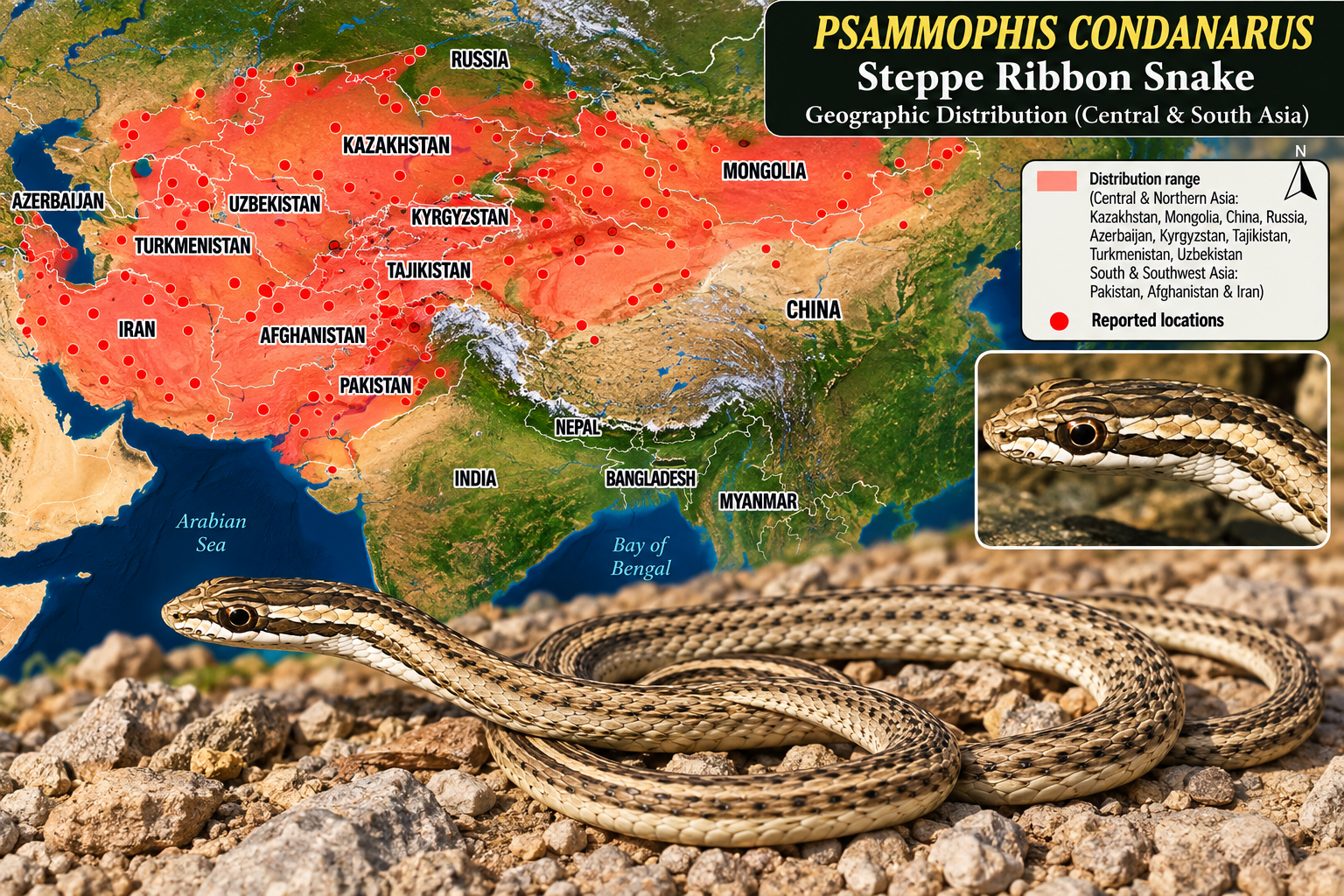
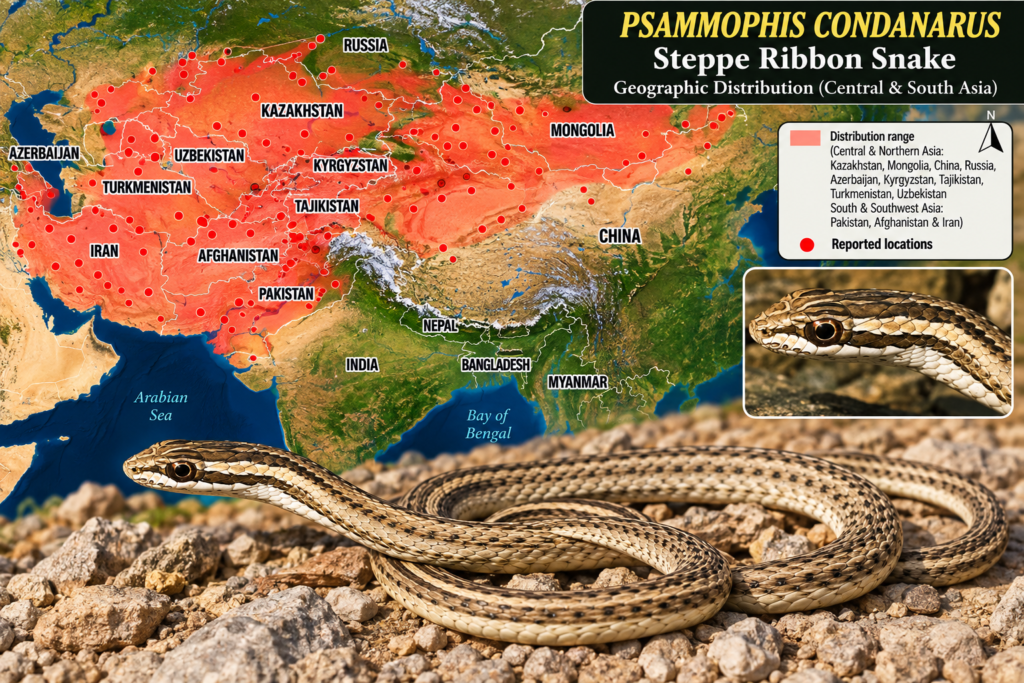
- Northwestern China, Mongolia, Russia, Kazakhstan, Azerbaijan, Kyrgyzstan, Tajikistan, Turkmenistan, Uzbekistan, Afghanistan, Iran, and Pakistan.
Habitat
- Mountains
- Forest
- Grassland
- Agricultural land
- Desert
Elevation: 2,200
Distribution Map
Behavior
Activity
- DiurnalThis snake remains active during the daytime
Diet
- Rohdents , Birds , ReptilesCarnivorous, feeding on lizards, insects, rodents, and small birds.
Defensive Behavior
Rapid Fleeing: Like most members of the sand snake and racer families, the steppe ribbon racer’s primary and immediate defense is high-speed flight. It relies on its incredible swiftness to dash across open ground and hide in dense vegetation, shrubs, or rodent burrows rather than standing its ground.
Camouflage & Freezing: Before or after moving, it uses its olive-gray or sandy coloration and dark longitudinal stripes to blend seamlessly into sun-baked steppes and dry grass, often freezing to avoid detection.
Head-Flattening and Intimidation (in related Psammophis species): When cornered or restrained, species in this genus have been observed flattening their head to mimic more dangerous vipers, gaping their mouth, and making rapid defensive strikes.
Hunting Behavior
Active Foraging: Unlike ambush predators that sit and wait, this snake is an active forager. It continuously moves through its environment to actively track, flush out, and pursue its prey.
Diurnal Hunter: It is strictly day-active (diurnal). It utilizes the warmth of the sun to reach optimal body temperatures, allowing it to achieve the high metabolic speeds required for a chase.
Visual Dominance: It relies heavily on its sharp, hawk-like eyesight and large pupils to spot movements across the open flats.
Subduing with Mild Venom: As a rear-fanged snake, it subdues its prey using a mild venom. While completely harmless to humans, this venom quickly immobilizes its targets once captured.
Seasonal Behavior
- Emergence: Wakes up from winter hibernation (brumation) as spring warms the soil and air.
- Basking & Activity: Becomes strictly diurnal (day-active), spending morning hours basking to raise its body temperature before hunting.
- Mating: Engages in courtship and mating behavior typically around May and June.
- Hunting & Feeding: Active daily across steppes and xeric shrublands, using its high speed and large round pupils to hunt lizards and large insects.
- Egg Laying: Females lay clutches of 3 to 11 elongated eggs in late June or July.
- Hatching: Young snakes emerge from the eggs in late July through August.
- Reduced Activity: Slows down as daytime temperatures and sunlight hours drop.
- Preparation for Winter: Migrates or moves toward sheltered underground burrows and rock crevices to prepare for cold weather
Hibernation / Brumation
-
Winter (November – February)
- Hibernation: Overwinters in a dormant state underground to survive freezing temperatures across its Asian range.
Reproduction
Reproductive Overview
- Reproductive method
- Oviparous (egg-laying)
- Mating season
- May and June
- Clutch / litter size
- 5 to 11 Eggs
- Incubation period
- 65-75 days
Breeding Behavior
Reproductive Style: Oviparous (egg-laying), unlike North American ribbon snakes (Thamnophis), which give live birth
Juvenile Characteristics
- Size at Hatching: Newly hatched juvenile steppe ribbon snakes emerge with a total body length ranging between 250 mm to 330 mm (25 to 33 cm).
- Coloration: Unlike some snake species that undergo drastic color changes as they mature, juvenile steppe ribbon snakes generally mirror adult coloration. They feature an olive-gray, sandy, or brownish-gray dorsal ground color.
- Striping: Their defining characteristic—four dark, longitudinal stripes with black borders—is already present on the head shields and runs the full length of the body, though the intensity of these stripes can vary or sometimes appear as rows of small dots.
- Ventral Markings: The belly is white and marked with distinct grayish, brownish, or olive-gray spots. In the front third of the juvenile’s body, these spots often merge into a continuous, dark center stripe.
- Body Shape: They exhibit an incredibly slender profile with a distinct, narrow head that is only slightly separated from the neck, long narrow frontal shields, and a noticeably large pupil
Human Interaction & Safety
If Encountered
- Keep a safe distance.
- Do not attempt to catch or kill the snake.
- Keep children and pets away.
- Contact a trained local wildlife / snake-rescue service where available.
- Mild Envenomation & Biting Dynamics
- • Rear-Fanged Anatomy: As a member of the Psammophis genus, this species has venom-delivering fangs located at the back of its mouth rather than the front.
- • Chewing Mechanism: To effectively inject venom, the snake must grab a target and use a "chewing" motion to bring its rear fangs into contact. In the highly unlikely event of a defensive bite, safely pull the snake off immediately to disrupt this chewing behavior and minimize venom transmission.
- • Symptoms: Envenomation from sand racers typically produces only minor, temporary localized symptoms. Expect mild swelling, local discomfort, or slight itching at the puncture site.
Similar Species
| Species | Difference |
|---|---|
| Turpan Sand Snake,Schokari Sand Racer ,Condanarus Sand Snake,Long Sand Racer,Indochinese Sand Snake |
Conservation
IUCN Status
Least Concern (LC)Population Trend
Stable (Least Concern)
Main Threats
- Habitat loss
- Human persecution
- Road mortality
- Climate change
- Pollution / pesticides
Conservation Programs
Does not have any dedicated global species-specific conservation programs.
Legal Protection
The Steppe ribbon racer (Psammophis lineolatus, also known as the steppe ribbon snake or arrow snake) has no global conservation evaluation under the IUCN Red list.