
Pakistan Sand Racer
Snake Image Gallery
Identification
How to Identify
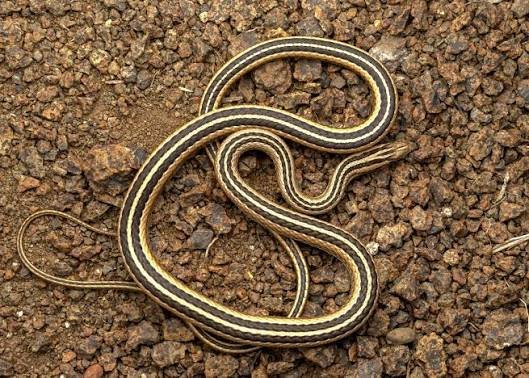
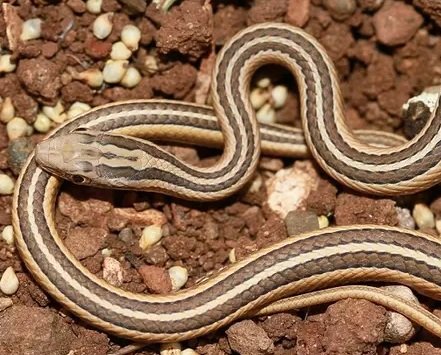
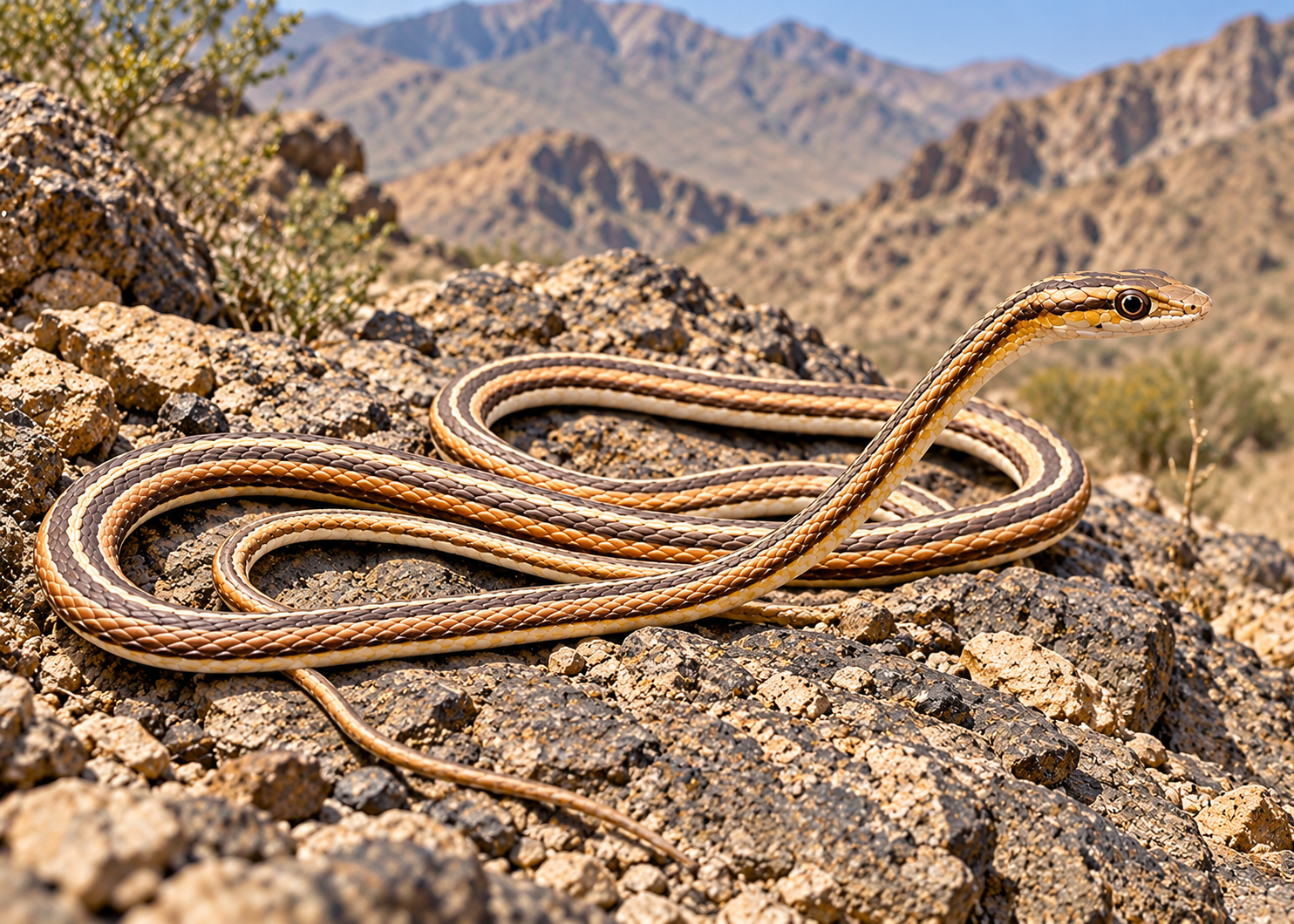
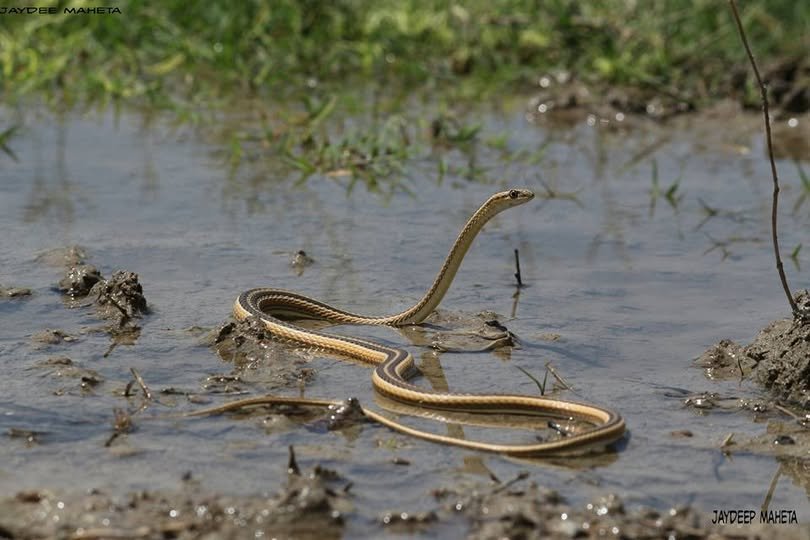
- Body colorPsammophis leithii ,Pakistan sand racer has a pale yellowish-brown, greyish, or sandy ground color marked by longitudinal stripes and distinct head patterns.
- Head shapeelongated, broader than the neck, and features a depressed (flattened) and pointed snout.
- Scale patternDorsal Scale Rows: The dorsal scales are smooth and arranged in 17 rows at midbody. They typically taper down to 13 or 15 rows near the tail.
- Eye characteristicsSize and Pupils they have large, prominent eyes with round pupils.
- Neck markingsForked Dorsal Stripes the two uppermost (dorsal) dark brown stripes originate directly from the top of the head.
- Average lengthUp to 99 cm (3 feet 3 inches), which includes a tail measuring roughly 30 cm (1 foot)
- Tail characteristicsUnlike the rest of the body, which features distinct dark longitudinal bands, the tail usually lacks dorsal stripes entirely, or the topmost bands fuse together and quickly fade out near the base
- Distinctive markingsFour Longitudinal Stripes the primary dorsal color is pale yellowish-brown or pale greyish. Running from the back of the head down the length of the body are four dark brown or grey-brown longitudinal stripes
Identification Warning
Taxonomy
| Classification | Details |
|---|---|
| Kingdom | Animalia |
| Phylum | Chordata |
| Class | Reptilia |
| Order | Squamata |
| Family | Psammophiidae |
| Genus | Psammophis |
| Species | Leithii |
Physical Characteristics
Size
- Average length
- Up to 99 cm (3 feet 3 inches), which includes a tail measuring roughly 30 cm (1 foot)
- Maximum recorded
- Greatest Recorded Length: 895 mm (2 ft 11 in) in nose-to-tail field data.
- Weight
- 90.44 grams
Appearance
- Body color
- Psammophis leithii ,Pakistan sand racer has a pale yellowish-brown, greyish, or sandy ground color marked by longitudinal stripes and distinct head patterns.
- Pattern
- slender, elongated build and distinct longitudinal stripes
- Head
- elongated, broader than the neck, and features a depressed (flattened) and pointed snout.
- Scales
- Dorsal Scale Rows: The dorsal scales are smooth and arranged in 17 rows at midbody. They typically taper down to 13 or 15 rows near the tail.
- Eyes
- Size and Pupils they have large, prominent eyes with round pupils.
- Tail
- Unlike the rest of the body, which features distinct dark longitudinal bands, the tail usually lacks dorsal stripes entirely, or the topmost bands fuse together and quickly fade out near the base
Sexual Dimorphism
- Male
- Males typically have 159 to 175 ventral scales,Subcaudal Scales (Tail Scales )Males typically have 104 to 109 subcaudal scales
- Female
- 170–187 ventral scales , 92–104 subcaudal scales
Habitat & Distribution
Geographic Distribution
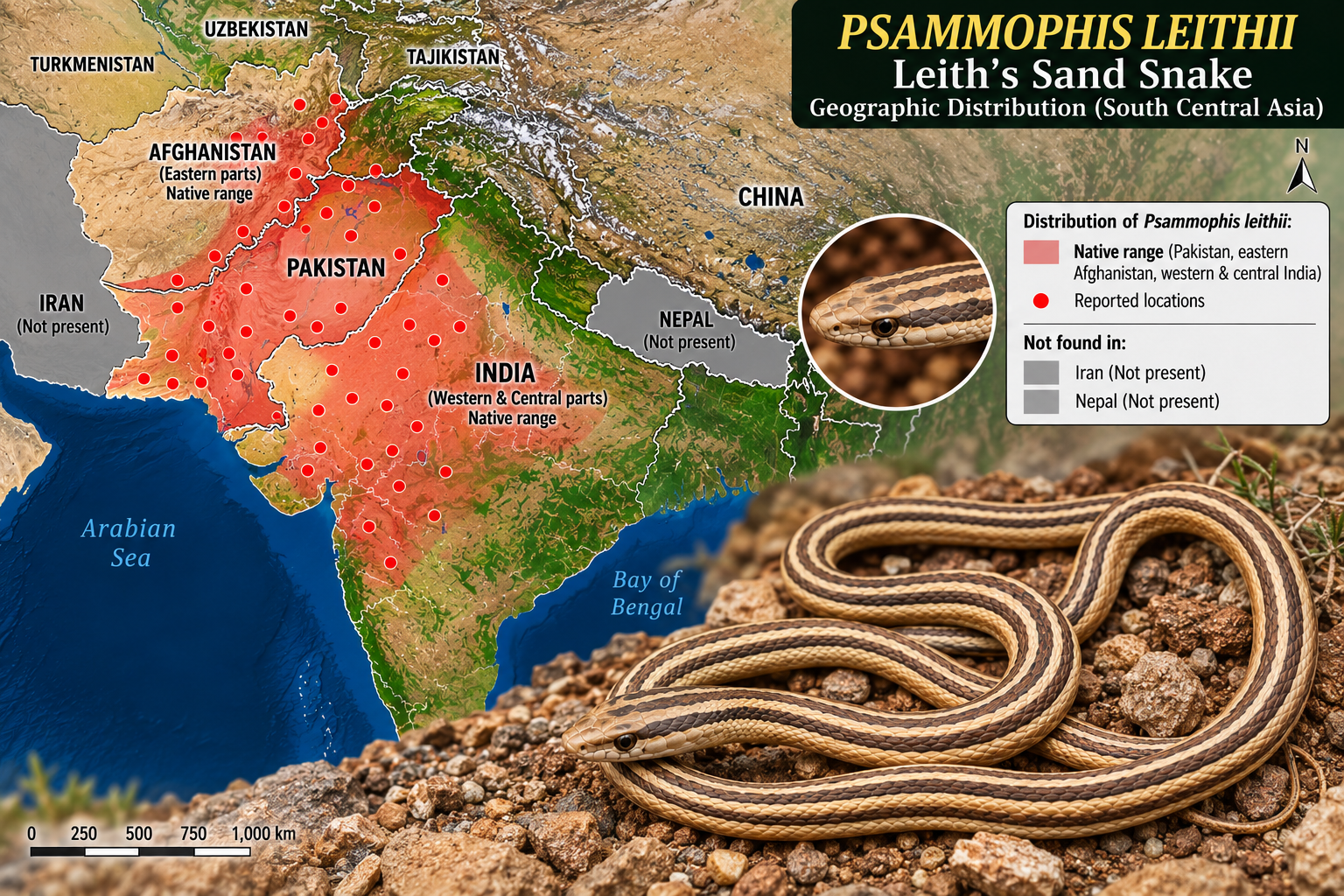
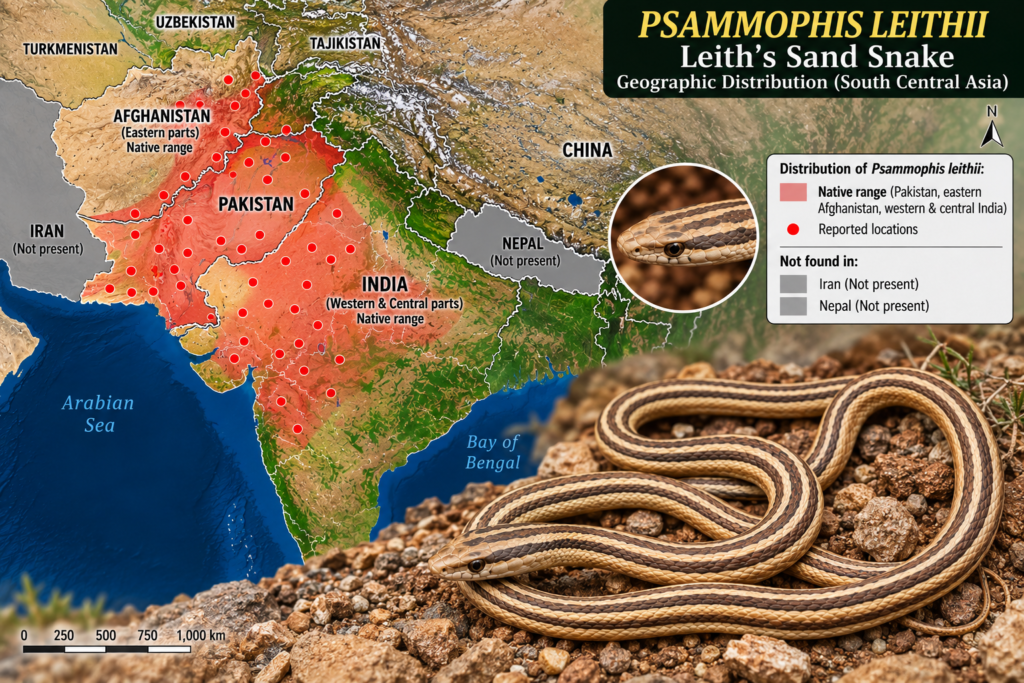
- The geographic distribution map of Psammophis leithii , Pakistan Sand Racer, spans across parts of South Asia and Central Asia, specifically covering regions of Pakistan, western India, and eastern Afghanistan
Habitat
- Mountains
- Forest
- Desert
- Urban / peri-urban areas
Elevation: 1,969 feet
Distribution Map
Behavior
Activity
- DiurnalPsammophis leithii (commonly known as Leith's sand snake or the Pakistan sand racer) is strictly diurnal, meaning it is active entirely during the daytime
Diet
- Small Lizards,Birds and Nestlings,Small Rodents & Frogs,Primarily feeds on various ground- and bush-dwelling lizards, including geckos (such as Hemidactylus species) and skinks.
Defensive Behavior
The defensive behavior of Leith’s sand snake (Psammophis leithii) is primarily characterized as non-aggressive, highly alert, and entirely flight-oriented. Like most members of the Psammophis genus, it relies on speed and evasion rather than standing its ground.
Hunting Behavior
Psammophis leithii ,Pakistan sand racer) is a highly specialized, fast-moving predator. Like other members of the genus Psammophis, its hunting strategy relies heavily on speed, visual tracking, and a specialized rear-fanged envenomation mechanism
Seasonal Behavior
As a diurnal, ectothermic reptile living in arid and semi-arid landscapes, its activity shifts drastically between the extreme heat, monsoons, and cooler seasons.During peak summer, they capitalize on their extreme speed and heat tolerance. They are among the few species that remain actively hunting on the ground during the hottest parts of the day.
Hibernation / Brumation
The typical brumation time for Psammophis leithii also known as the Pakistan Sand Racer, spans 2 to 3 months during the peak winter season, generally beginning between November and December and lasting until February or March
Reproduction
Reproductive Overview
- Reproductive method
- Oviparous (egg-laying)
- Mating season
- late winter to early spring months
- Clutch / litter size
- 4 to 10 eggs
- Incubation period
- approximately 50 to 65 days (around 2 months) depending heavily on ambient temperatures
Breeding Behavior
The breeding behavior of Psammophis leithii (commonly known as Leith’s sand snake or the Pakistani ribbon snake) is highly synchronized, seasonal, and quiet.
Juvenile Characteristics
Juvenile characteristics of Psammophis leithii , the Pakistan Sand Racer) center primarily on their highly pronounced color patterns. Like many sand snakes, their markings fade or become increasingly patternless as they mature into adults.
Human Interaction & Safety
If Encountered
- Keep a safe distance.
- Do not attempt to catch or kill the snake.
- Keep children and pets away.
- Contact a trained local wildlife / snake-rescue service where available.
- Non-Aggressive Nature These snakes are exceptionally fast, alert, and diurnal (active during the day). When encountering a human, their primary instinct is to rapidly flee into bushes, grass, or rocky crevices rather than stand their ground, While they do not pose a threat to humans, human expansion poses a mild threat to them. Encroaching urbanization and habitat fragmentation occasionally drive them into rural properties, leading to accidental roadkills or intentional killing by humans due to mistaken identity. They are sometimes confused with more dangerous species like the rat snake.Would you like details on how to identify Leith's sand snake to differentiate it from dangerous species, or are you looking for general snake safety protocols for the South Asian region.
Similar Species
| Species | Difference |
|---|---|
| Psammophis schokari ,Psammophis longifrons,Psammophis condanarus,Psammophis lineolatus. |
Conservation
IUCN Status
Least Concern (LC)Population Trend
Stable (unkown)
Main Threats
- Habitat loss
- Human persecution
- Road mortality
- Climate change
- Pollution / pesticides
Conservation Programs
There are no dedicated, species-specific conservation programs for Leith's Sand Snake (Psammophis leithii). This is primarily because the snake is globally classified as Least Concern (LC) on the IUCN Red List, and it adapts exceptionally well to tough, arid, and semi-arid desert or scrub forest ecosystems.
Legal Protection
Psammophis leithii (commonly known as the Pakistan sand racer or Leith's sand snake) is legally protected under Schedule Islamabad Wildlife Ordinance (Islamabad Nature Conservation and Wildlife Management Act, 2024,Balochistan Wildlife Protection Act (Balochistan Wildlife Protection Act, 2014): Focuses on regional habitat protection and desert/mountain wildlife species.Sindh Wildlife Protection Act (Sindh Wildlife Protection Act 2020 / historical Sindh Wildlife Ordinance 1972): Regulates the hunting, capture, and trade of wild species in Sindh under modern conservation standards.