
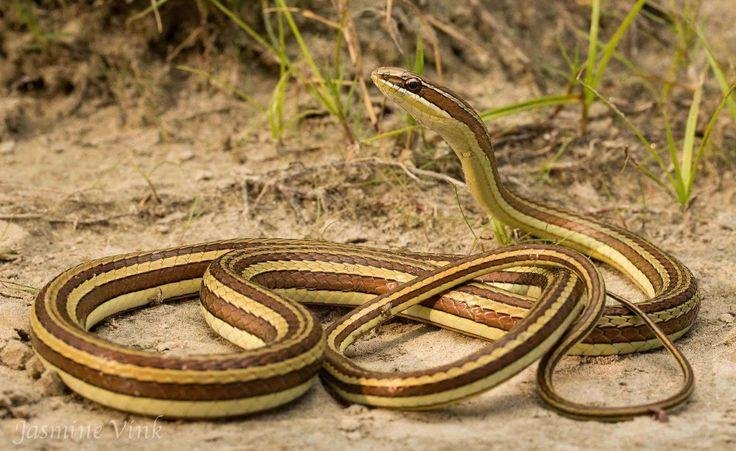
Condanarus Sand Snake
Snake Image Gallery
Identification
How to Identify
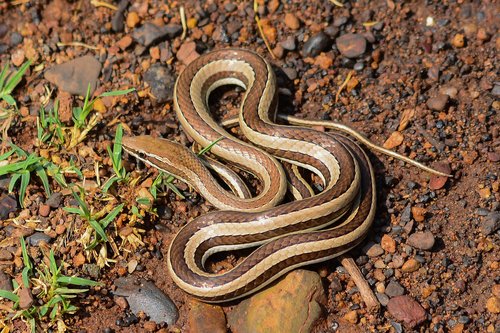
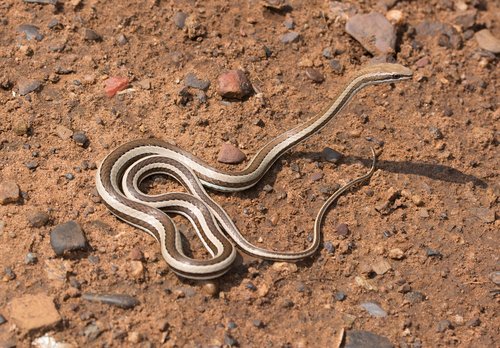
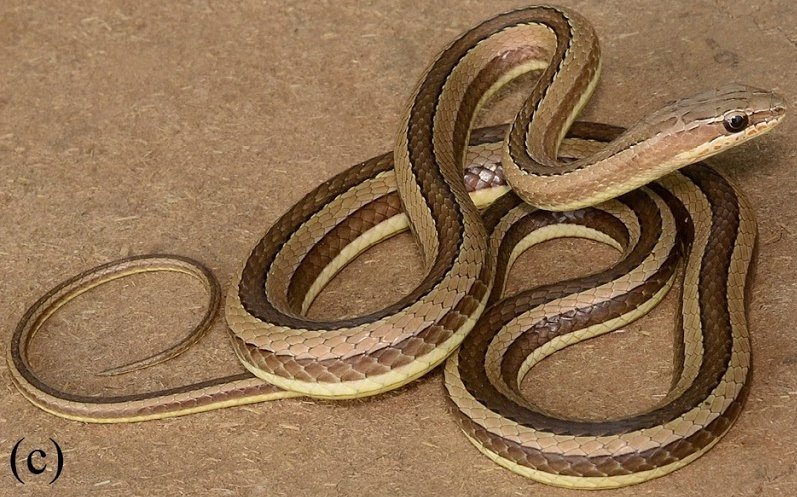
- Body colorPsammophis condanarus (Condanarus sand snake) features a pale brown, light olive, or olive-brown ground color marked by distinct longitudinal stripes
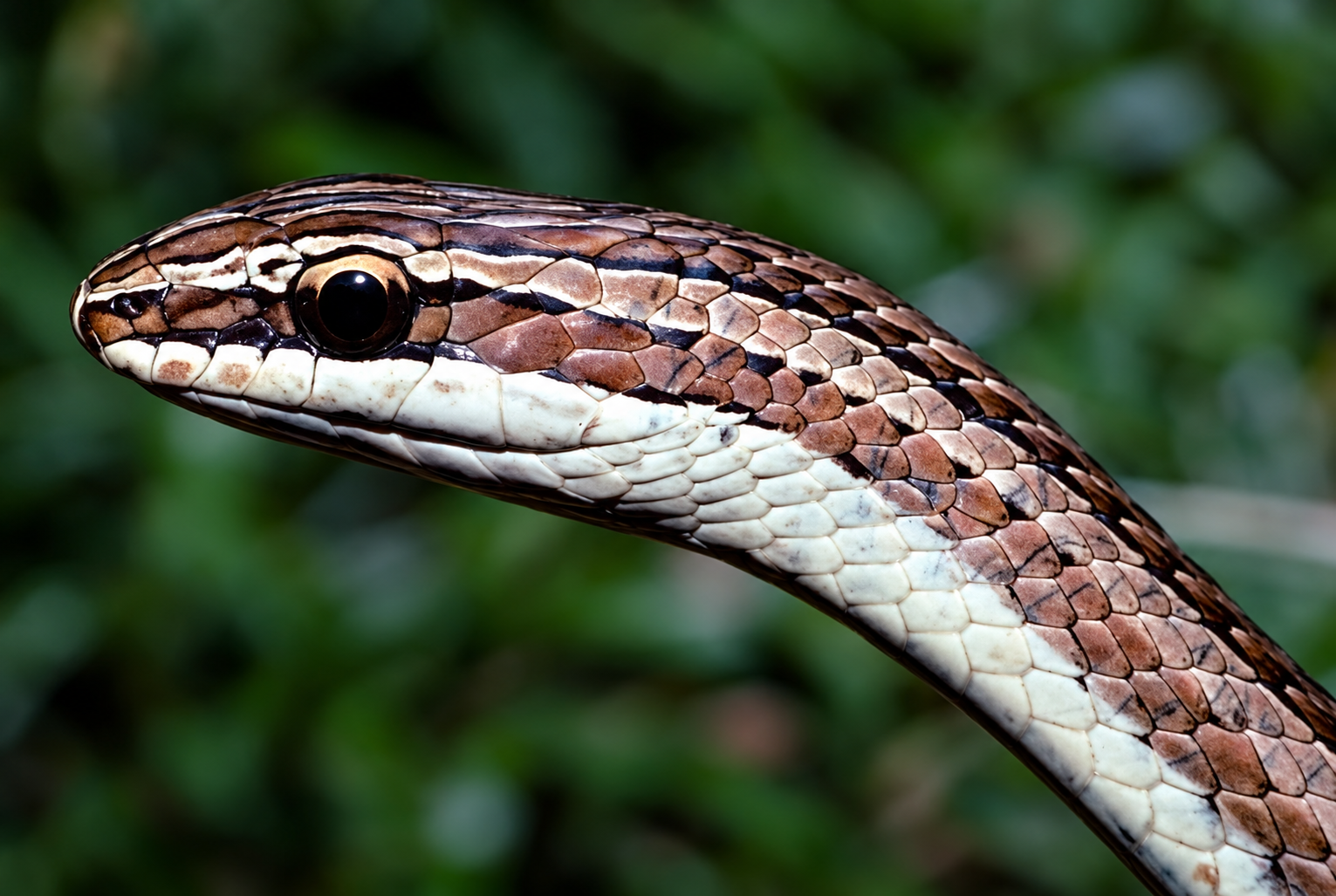
- Head shapeelongated, distinct and broader than the neck
- Scale patternDorsal Rows 17 rows, distinct apical pits
- Eye characteristicsEys Size Large ,Round pupil, One of the pale olive-brown/dark lateral bands on the body passes directly through the eye.
- Neck markingsThe Forked Vertebral Stripe,Lateral Neck Stripes,
- Average lengthMaximum Length Up to 107.5 cm (approx. 3.5 feet)
- Tail characteristicsStructure The tail is long, slender, very thin, and tapers smoothly to a point from the robust body
- Distinctive markingsThe Condanarous sand snake is primarily identified by its distinctively striped, elongated body and sharply defined facial markings
Identification Warning
Taxonomy
| Classification | Details |
|---|---|
| Kingdom | Animalia |
| Phylum | Chordata |
| Class | Reptilia |
| Order | Squamata |
| Family | Psammophiidae |
| Genus | Psammophis |
| Species | Condanarus |
Physical Characteristics
Size
- Average length
- Maximum Length Up to 107.5 cm (approx. 3.5 feet)
- Maximum recorded
- 1.075 m or about 3 feet 6 inches
- Weight
- between 53.8 grams to 70.5 grams
Appearance
- Body color
- Psammophis condanarus (Condanarus sand snake) features a pale brown, light olive, or olive-brown ground color marked by distinct longitudinal stripes
- Pattern
- Both sexes share the characteristic pale olive-brown or rosy-grey dorsum with dark, longitudinal stripes (a broad five-scale-wide vertebral stripe flanked by thinner lateral stripes) and a yellowish underbelly.
- Head
- elongated, distinct and broader than the neck
- Scales
- Dorsal Rows 17 rows, distinct apical pits
- Eyes
- Eys Size Large ,Round pupil, One of the pale olive-brown/dark lateral bands on the body passes directly through the eye.
- Tail
- Structure The tail is long, slender, very thin, and tapers smoothly to a point from the robust body
Sexual Dimorphism
- Male
- Subcaudal Scales 85 to 93 pairs (male Larger then Females0
- Female
- Subcaudal Scales 75 to 85 pairs
Habitat & Distribution
Geographic Distribution
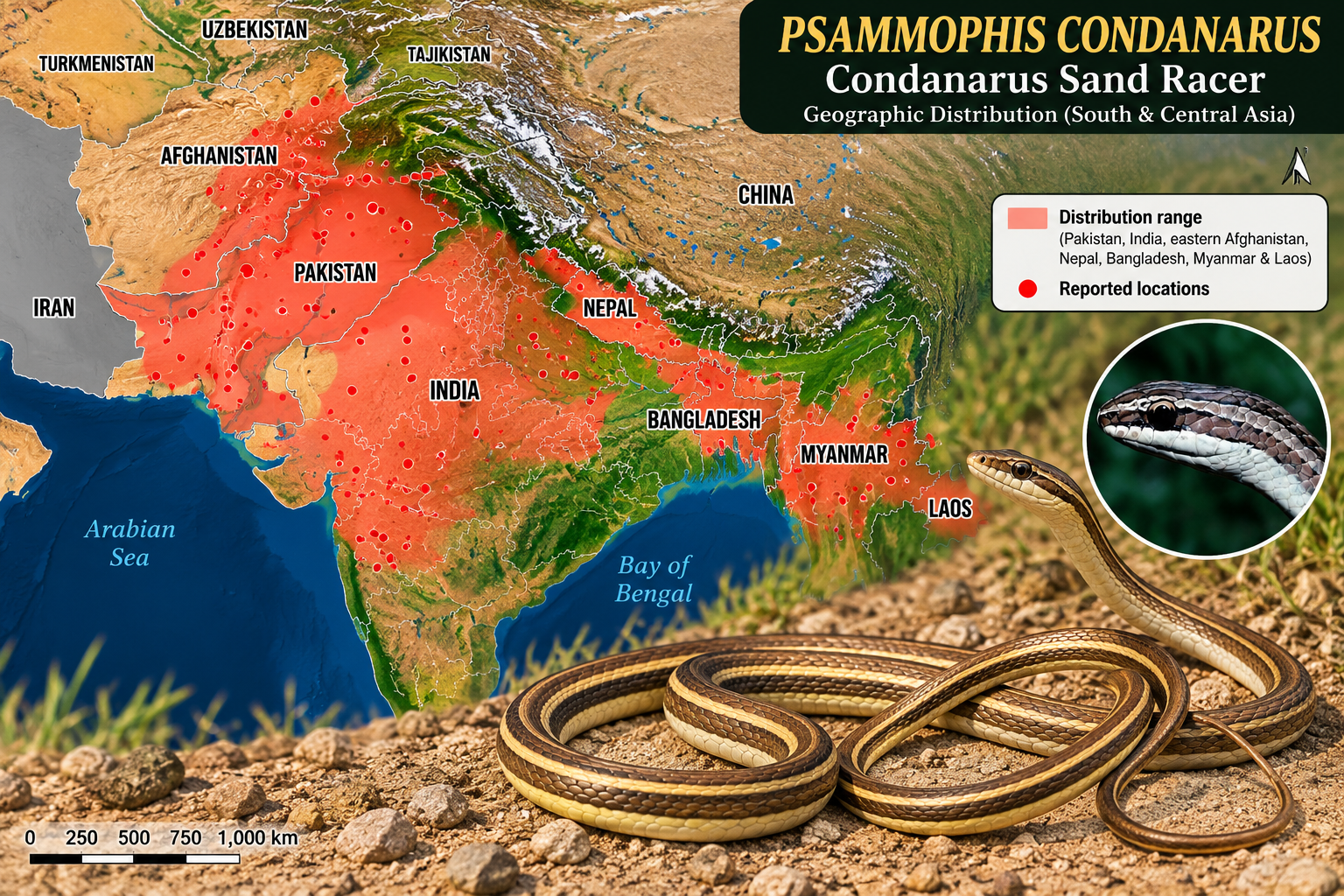
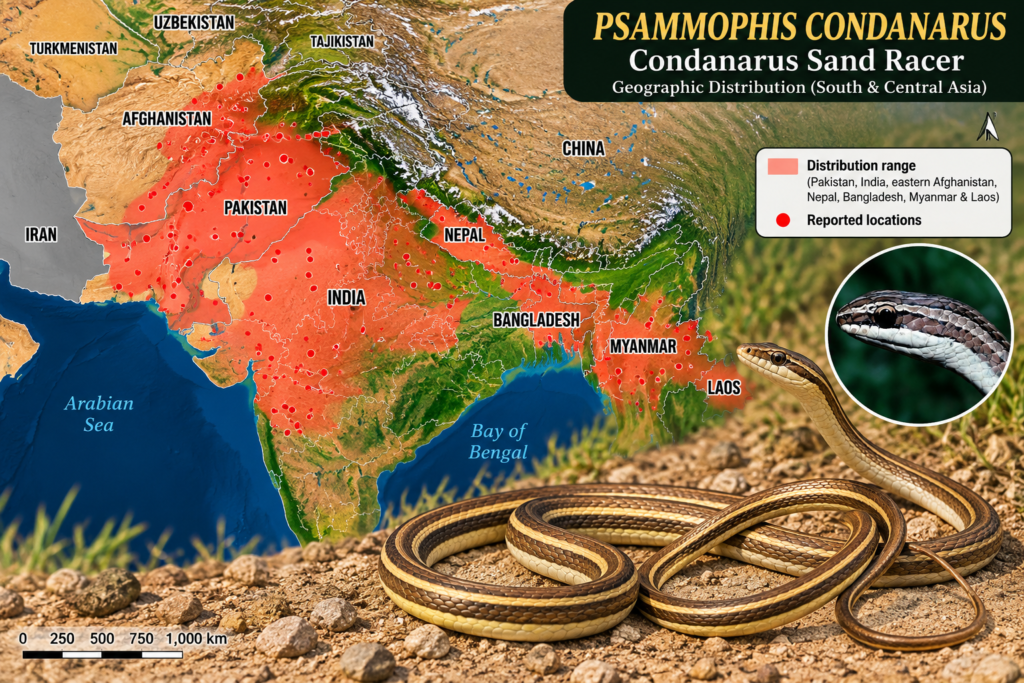
- • India: Widely recorded across northern, central, and peninsular regions (including Andhra Pradesh, Bihar, Chhattisgarh, Gujarat, Himachal Pradesh, Karnataka, Madhya Pradesh, Maharashtra, Odisha, Punjab, Telangana, Uttar Pradesh, and West Bengal), as well as southern records in Tirupati (Eastern Ghats) and Hospete (Deccan plateau).
- • Pakistan: Found in dry low-country and semi-arid zones.
- • Nepal: Recorded in lower-elevation and dry zones.
- • Bangladesh: Formally recorded in Chapainawabganj District (Nawabganj).
- • Myanmar & Laos: Listed as part of the broader regional distribution by taxonomic databases
Habitat
- Mountains
- Forest
- Grassland
- Desert
Elevation: 2,250 meters above sea level
Distribution Map
Behavior
Activity
- DiurnalPeak Activity they are active throughout the day, utilizing the sunlight to thermoregulate and maintain the high body temperatures required for their fast-moving lifestyle
Diet
- Lizards,Skinks,Rodents,Small Birds ,Birds Chicks,Small SnakesLizards ,Skinks and rodents the primary component of its diet, actively chased and caught on the ground or low vegetation.
Defensive Behavior
The primary defensive behavior of Psammophis condanarus (the Condanarus Sand Snake) is rapid flight and evasion. It is an exceptionally alert, quick-to-respond, and non-offensive species that relies almost entirely on its extreme speed to escape perceived threats rather than staying to fight.
Hunting Behavior
Seasonal Behavior
Because it is an ectotherm living in environments ranging from arid grasslands to rocky foothills, its seasonal behavior is highly tied to temperature, rainfall, and resource availability.
Spring Activation (March – April)
With the onset of spring, warming temperatures stir the snakes out of their winter shelters.
Summer Thermoregulation & Water Conservation (May – June)
While naturally diurnal, during extreme summer heat waves, Psammophis condanarus manages its body temperature by seeking refuge in cooler animal burrows, rock gaps, or deep inside dense, low-height thorny vegetation.
Snout-Rubbing Behavior: To combat intense dry heat, this genus exhibits a unique seasonal/environmental adaptation where they rub the sides of their snouts against their bodies. This behavior is widely hypothesized to secrete and spread a thin layer of lipid/oil over their scales to prevent moisture loss (evaporative water loss) in arid ecosystems.
Monsoon Breeding & Egg-Laying (July – September)
Reproduction: As an oviparous (egg-laying) species, its primary breeding and nesting seasons coincide with the periods of high humidity and rainfall.
Nesting: Females actively search out secure microhabitats protected from predators and heavy rains such as the spaces under heavy rocks, tree holes, soil mounds, and small earth caves—to deposit their eggs. The abundance of prey (like frog and juvenile lizards) during the monsoon supports both the recovering mothers and the newly hatched young.
Hibernation / Brumation
- Dormancy: As ambient temperatures drop drastically in late autumn, the snake enters a low-energy dormancy state known as brumation.
- Shelter Seeking: They completely retreat underground into abandoned rodent burrows or deep rocky fissures to stay insulated from the cold, remaining largely inactive until the cycle restarts the following spring.
Reproduction
Reproductive Overview
- Reproductive method
- Oviparous (egg-laying)
- Mating season
- July to September
- Clutch / litter size
- Typically ranges from 4 to 8 eggs per clutch
- Incubation period
- 50-69 days
Breeding Behavior
The breeding and reproductive behavior of Psammophis condanarus (commonly known as the Condanarus Sand Snake or Indian Sand Snake) is typical of fast-moving, diurnal colubrid/psammophiid snakes
- Psammophis condanarus is strictly oviparous (egg-laying).
- After successful mating and gestation, the female seeks out dark, protected, and sufficiently humid microsites to deposit her clutch. Typical nesting locations include under rocks, inside tree holes, animal mounds, and small earth caves.
Human Interaction & Safety
If Encountered
- Keep a safe distance.
- Do not attempt to catch or kill the snake.
- Keep children and pets away.
- Contact a trained local wildlife / snake-rescue service where available.
- Venom Toxicity & Human Danger
- Mildly Venomous / Rear-Fanged: Like all members of the genus Psammophis, P. condanarus possesses rear fangs (opisthoglyphous) and mild venom.
- Not Dangerous to Humans
- Its venom is highly adapted for neutralizing small, cold-blooded prey (such as lizards and frogs) and is medically insignificant to humans.
- Bite Symptoms A defensive bite from this snake typically results in localized, transient symptoms. These commonly include minor puncture wounds or lacerations, mild to moderate localized pain, and localized swelling (edema). Systemic envenomation does not occur.
- Species-Specific Behavioral Risks
- • "Chewing" Bite Mechanism: Because its fangs are located at the back of the mouth, the snake cannot inject venom effectively through a quick, defensive strike. Envenomation generally requires a prolonged, protracted bite where the snake latches and "chews" to engage its rear fangs. Most symptomatic bites happen when a human physically handles the snake and allows it to remain attached.
- • Non-Offensive but Highly Alert: This species is naturally non-aggressive and prefers to flee into thorny bushes or rock crevices at the first sign of danger. However, it is extremely fast and alert, meaning it can easily bite if pinned, cornered, or accidentally grabbed.
- Specific Safety & Handling Protocols
- Do Not Pull Away If a P. condanarus bites and latches onto skin, do not pull your hand back abruptly. Its teeth are curved backward; pulling away can rake the teeth through flesh, worsening lacerations, and potentially snapping off teeth inside the wound or breaking the snake's jaw. Instead, remain still and gently encourage the snake to release.
Similar Species
| Species | Difference |
|---|---|
| Psammophis indochinensis (Indochinese Sand Snake) | |
| Psammophis leithii (Leith's Sand Snake) | |
| Psammophis schokari (Afro-Asian Sand Snake) | |
| Look-alikes from Other Genera | |
| Dendrelaphis tristis (Common Bronzeback) | |
| Amphiesma stolatum (Striped Keelback) |
Conservation
IUCN Status
Least Concern (LC)Population Trend
Stable (Least Concern)
Main Threats
- Habitat loss
- Human persecution
- Road mortality
- Climate change
- Pollution / pesticides
Conservation Programs
There are no species-specific conservation programs targeting the Condanarus Sand Snake (Psammophis condanarus). This is primarily because the species is globally assessed as Least Concern (LC) on the IUCN Red List. It has a highly expansive geographic range spanning across India, Pakistan, Nepal, Bangladesh, and Myanmar
Legal Protection
Psammophis condanarus is legally protected under the Wildlife Protection Act (1972), where it has traditionally been classified under Schedule IV.
IUCN Red List: The species is categorized globally as Least Concern (LC) on the IUCN Red List. While it is not considered globally endangered, local populations face localized pressures due to the conversion of scrub forests and open woodlands into agricultural land.