The Caspian Cobra
Identification
Identification Warning
Taxonomy
| Classification | Details |
|---|---|
| Kingdom | Animalia |
| Phylum | Chordata |
| Class | Reptilia |
| Order | Squamata |
| Family | Elapidae |
| Genus | Naja |
| Species | Naja oxiana |
Venom Information
Venom Status
Venomous
Medical significance depends on species, bite circumstances, venom dose and treatment availability.
Venom Type
Venom Delivery
Physical Characteristics
Size
- Maximum recorded
- 1.5 - 1.7 To 2.0 Meters
- Weight
- 1.0 to 1.5 Kg
Appearance
- Pattern
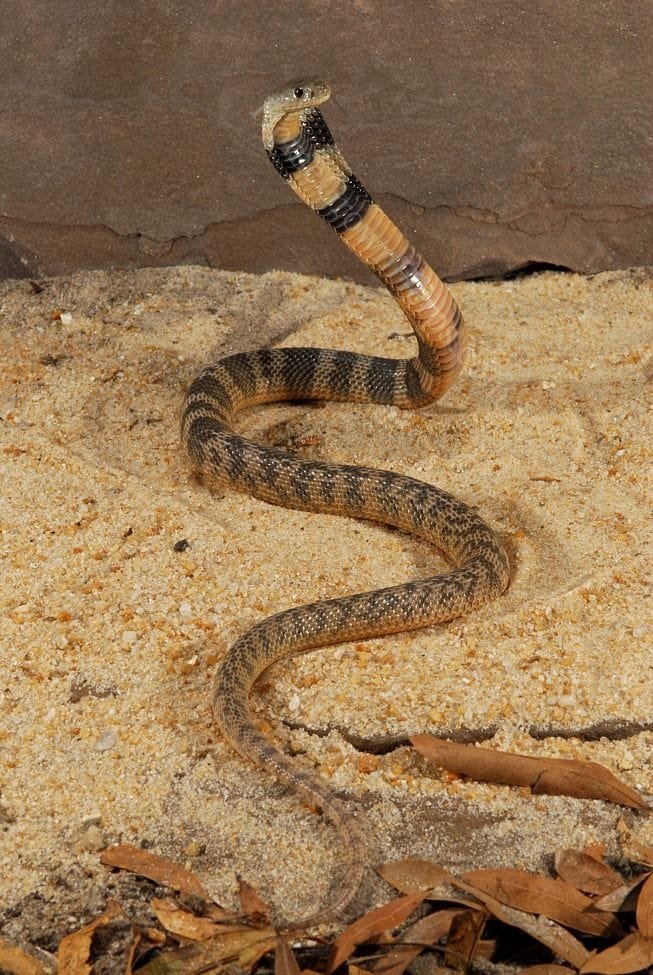
- Distinct Dark and Light Cross Bands
Sexual Dimorphism
- Male
- Subtle. Both Sexes Share Identical (Browns, Yellowish, Dark Gray) Dorsal Tones
- Female
- Subtle. Both Sexes Share Identical (Browns, Yellowish, Dark Gray) Dorsal Tones
Habitat & Distribution
Geographic Distribution
- Trans Caspian Region
- Pakistan
- Khyber Pakhtunkhwa, Balochistan, Gilgit Baltistan, Azad Kashmir
Habitat
- Mountains
- Forest
- Grassland
- Agricultural land
- Wetland
- Desert
- Urban / peri-urban areas
Elevation: The Caspian Cobra (Naja oxiana) Lives at Elevation Up to About 3,000 Meters (9,800 Feet) Above Sea Level
Behavior
Defensive Behavior
Vertical Posturing, Hood Extension, Elongated Hooding, Sham Strikes, Arousal Cues, State Adjustments
Hunting Behavior
Foraging Approach, Dietary Range, Subduing Prey, Climbing and Swimming
Seasonal Behavior
The Caspian cobra (Naja oxiana) shifts its daily activity and metabolic cycles across seasons, changing from a diurnal routine in cooler months to a crepuscular or nocturnal one during peak summer heat
Hibernation / Brumation
Brumation – In the wild, there is no single universally fixed date for the brumation period of the Caspian cobra (Naja oxiana) because it relies entirely on local temperatures, altitude, and climate variations across its Central Asian range. However, herpetological observations and captive breeding standards provide a clear timeframe for this species- Wild Brumation Period : In their natural habitats—ranging from the high-elevation rocky foothills of northern Pakistan and Afghanistan to the cold desert regions of Turkmenistan and Uzbekistan—Naja oxiana undergoes brumation for approximately 4 to 5 months. Timeline: They typically enter subterranean dens or rock crevices between mid-to-late October or November and emerge in March or April as seasonal temperatures rises. Captive Brumation Period: For herpetologists and breeders keeping Naja oxiana in captivity to induce natural reproductive behaviors, a controlled brumation period of 3 to 4 months is standard. Timeline: Captive cooling typically begins in October or November and winds down by early-to-mid January, followed by a gradual warming period before pairing the snakes for spring mating.
Reproduction
Reproductive Overview
- Reproductive method
- Oviparous (egg-laying)
- Mating season
- May
- Clutch / litter size
- 6-19
- Incubation period
- 60 to 65 Days
Breeding Behavior
• eggs in protected underground burrows, decaying vegetation, or hidden crevices during mid-summer (July). • Incubation: The incubation period lasts approximately 60 to 65 days. • Guarding: Females demonstrate maternal care by staying with and guarding the clutch throughout the incubation period until the eggs hatch.
Juvenile Characteristics
Juvenile Caspian cobras (Naja oxiana) exhibit a distinctly pale, faded appearance characterized by prominent dark and light cross-bands around the entire body. This contrasting pattern undergoes significant ontogenetic variation as they age, completely transforming into the uniform coloration seen in adults.
Human Interaction & Safety
If Encountered
- Keep a safe distance.
- Do not attempt to catch or kill the snake.
- Keep children and pets away.
- Contact a trained local wildlife / snake-rescue service where available.
Snakebite Information
If someone is bitten, seek emergency medical care immediately.
Do not attempt to suck out venom, cut the wound, or apply a tourniquet unless specifically directed by medical professionals.
Similar Species
| Species | Difference |
|---|---|
| Indian Cobra (Naja naja) |
Conservation
IUCN Status
Least Concern (LC)Population Trend
Unknown
Main Threats
- Habitat loss
- Human persecution
- Road mortality
- Climate change
- Pollution / pesticides