
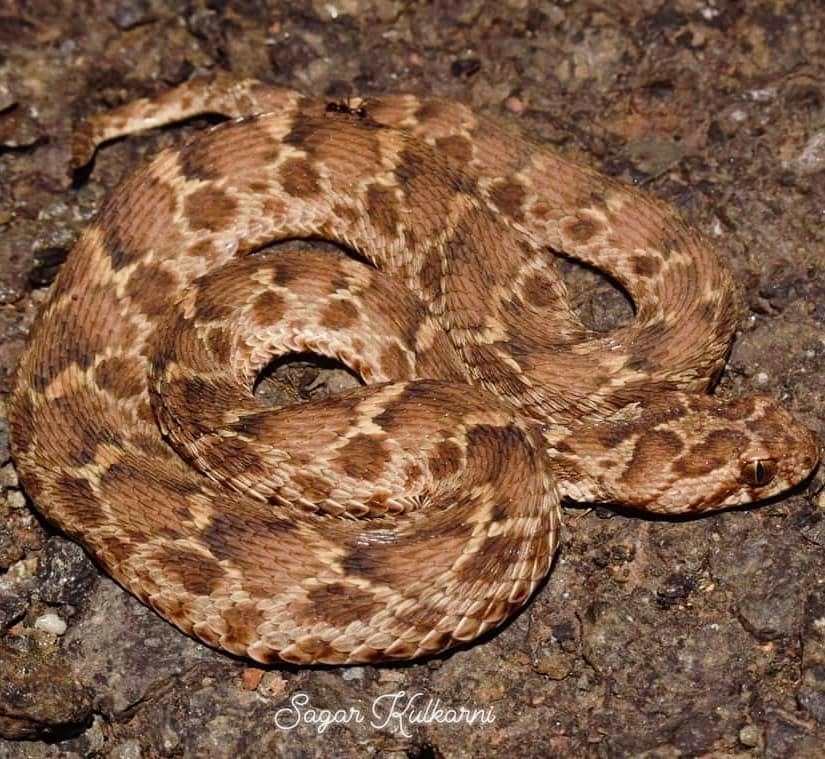
Saw Scaled Viper
Snake Image Gallery
Identification
How to Identify
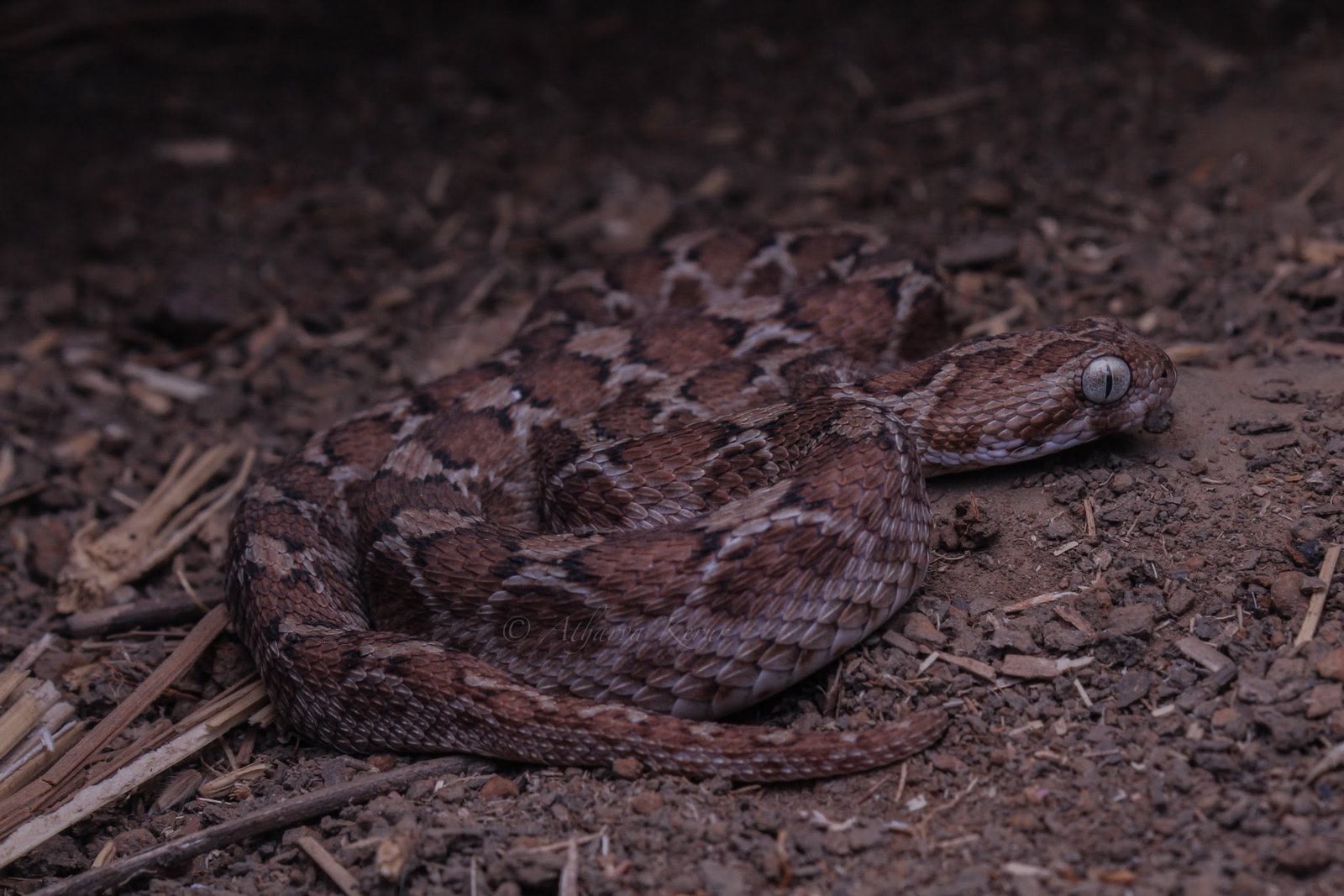
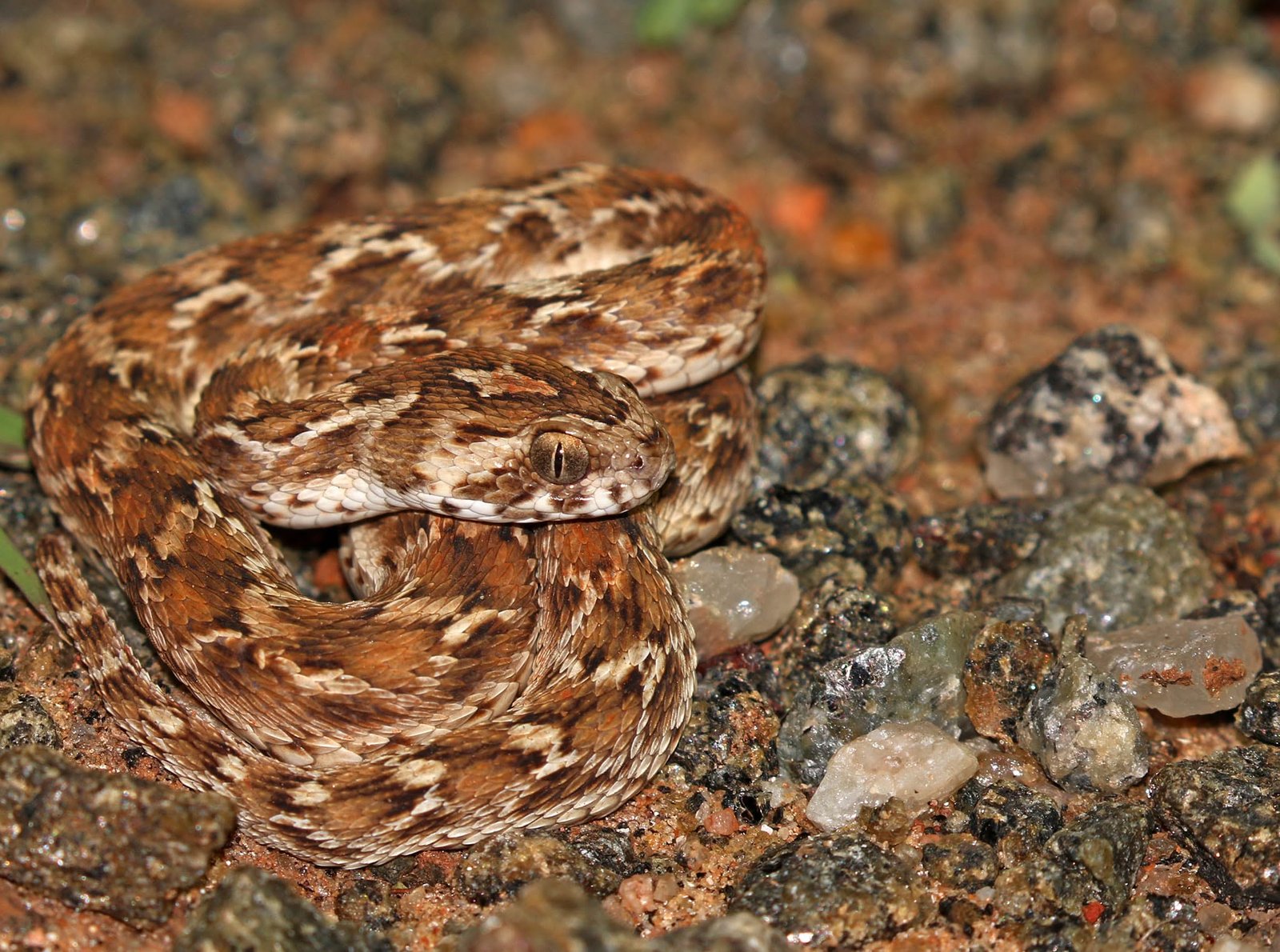
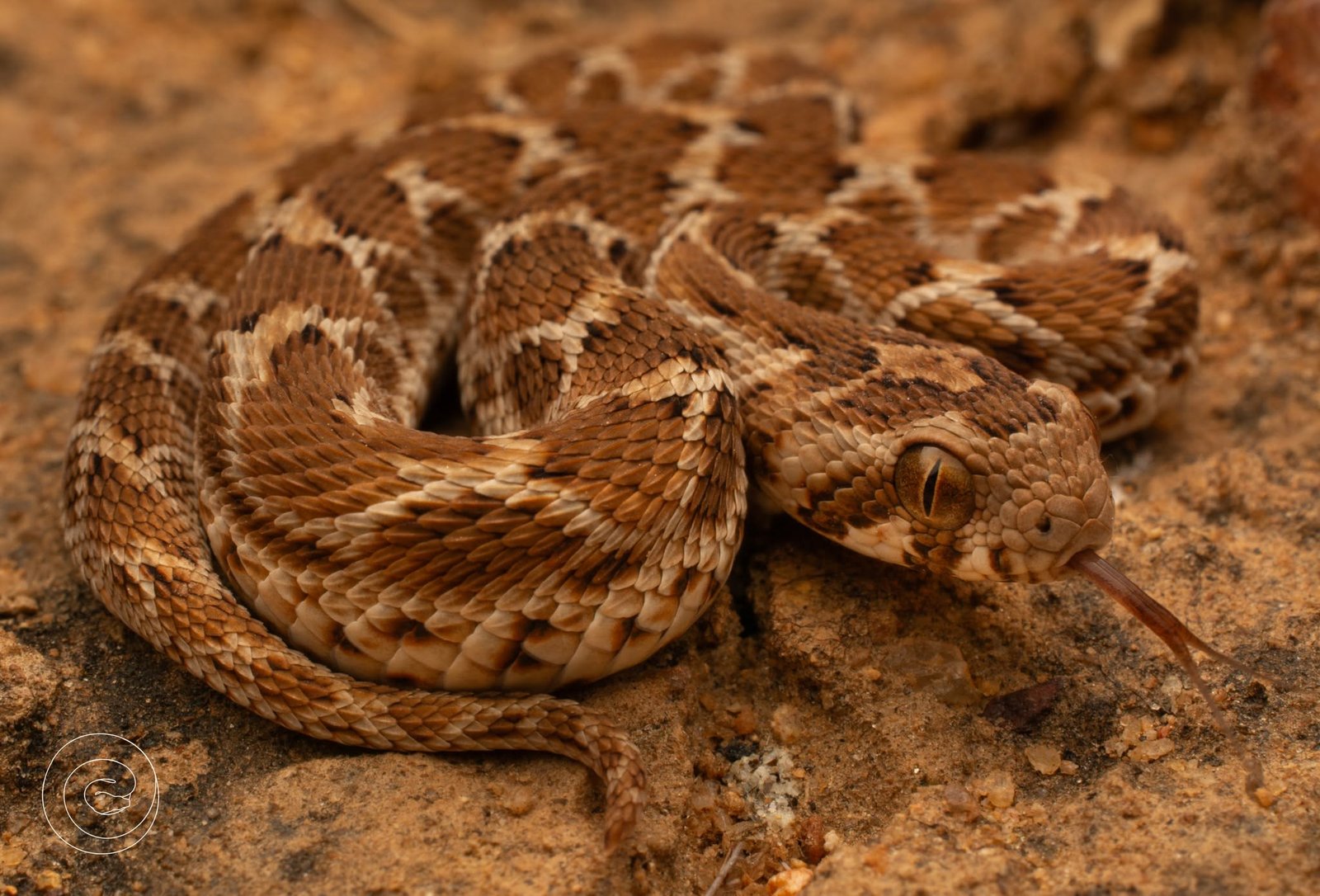
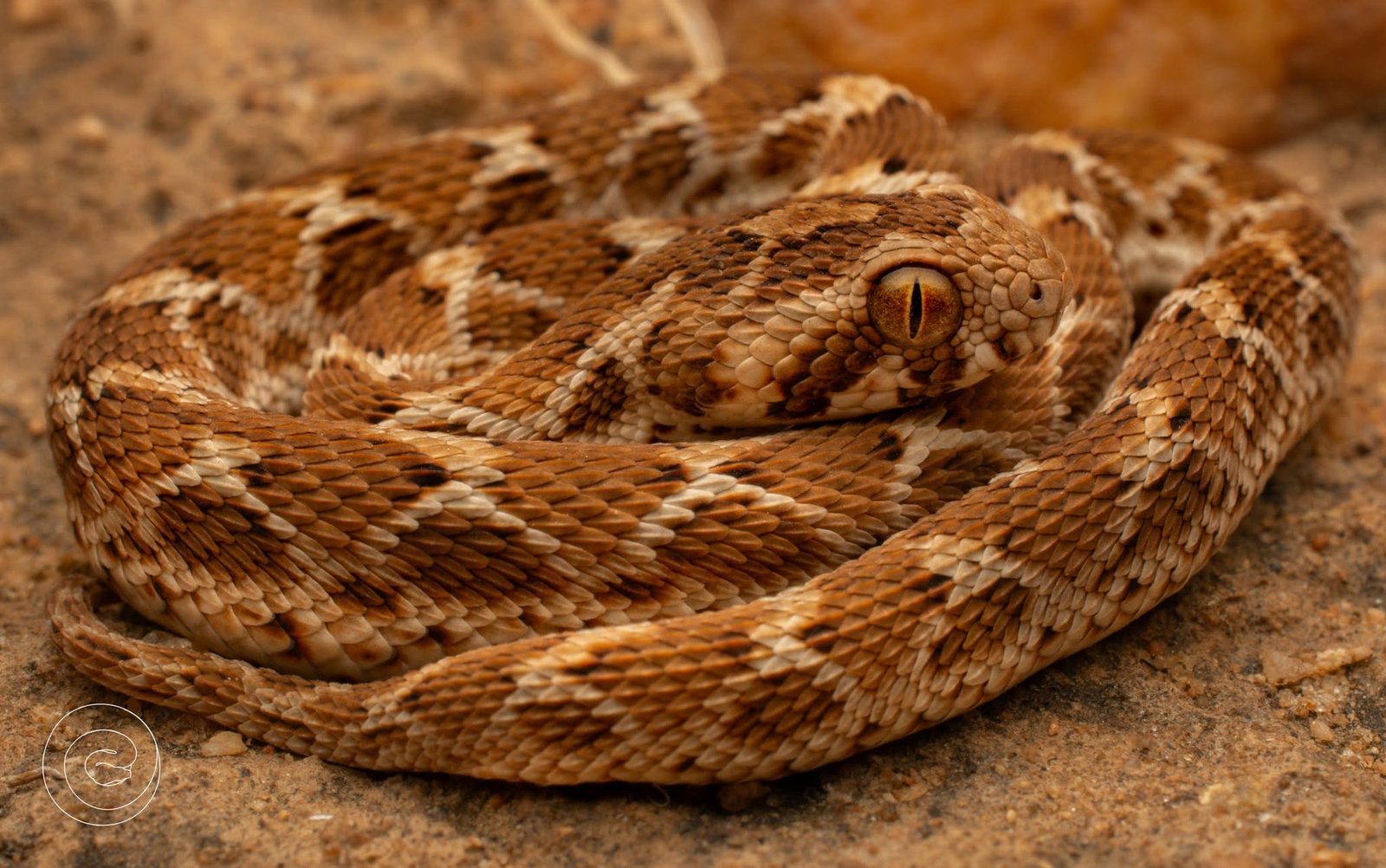
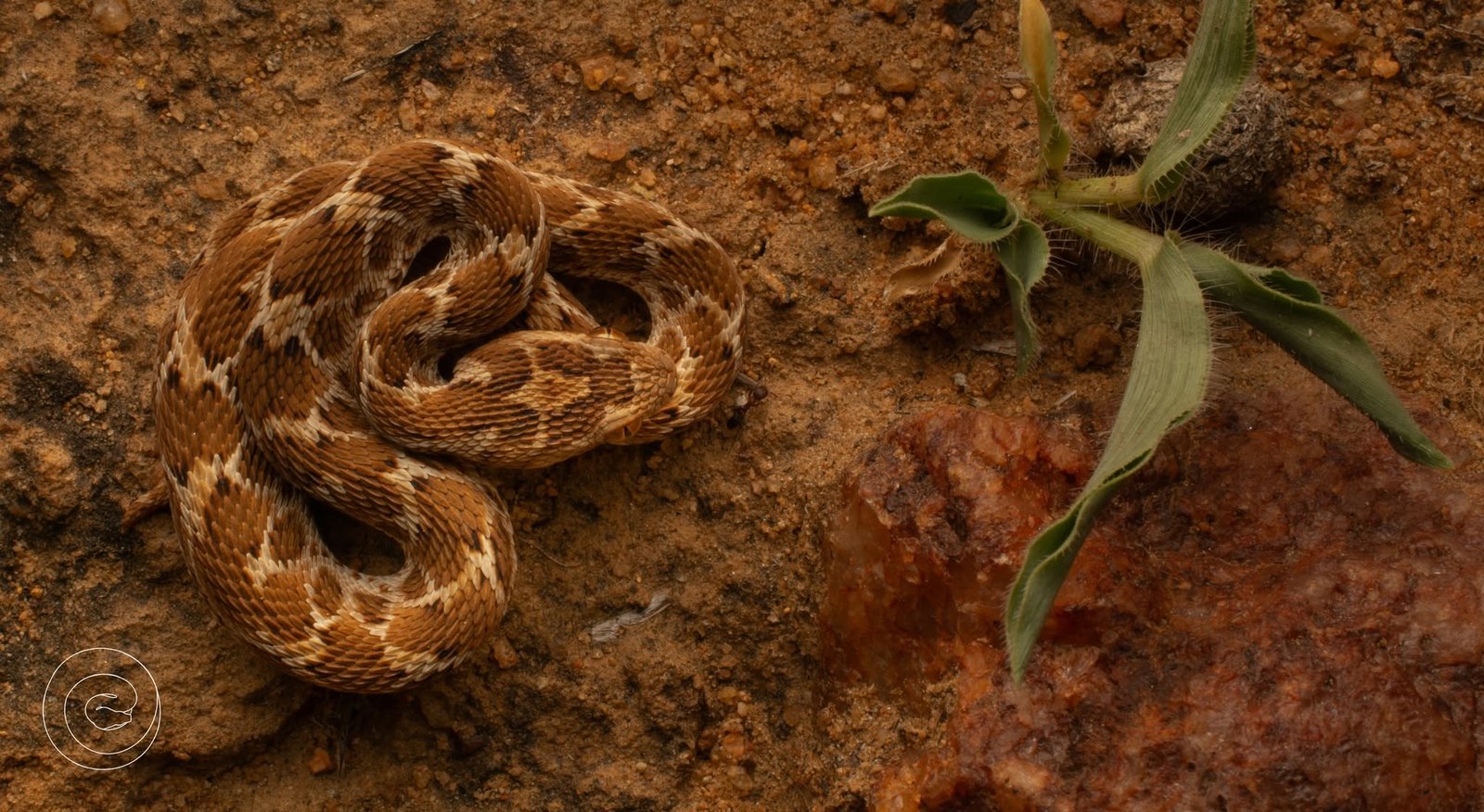
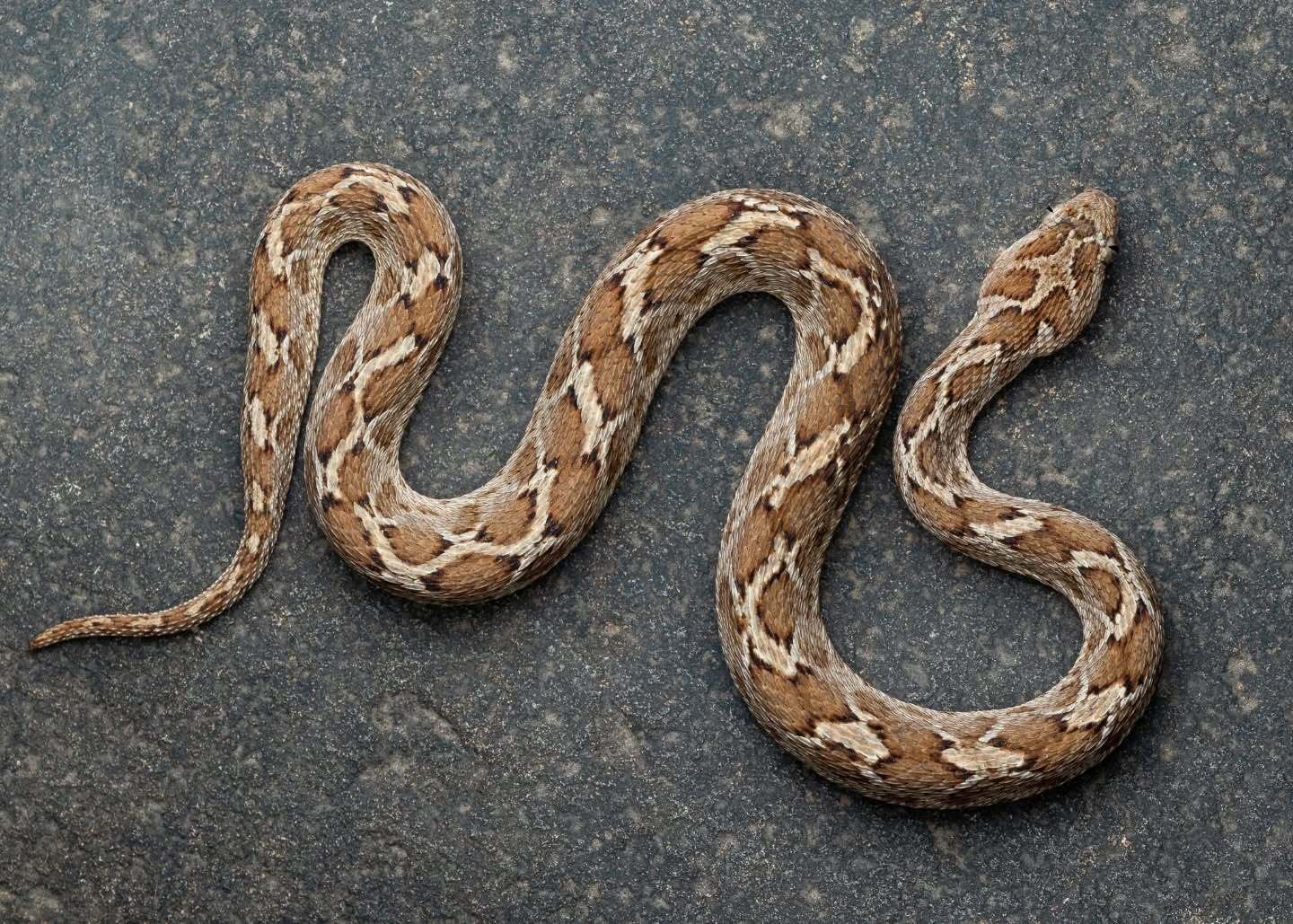
- Body colorThe body color of Echis carinatus (The Saw-scaled Viper) features a ground color of Pale Buff, Grayish, Reddish, Olive, or Pale Brown.
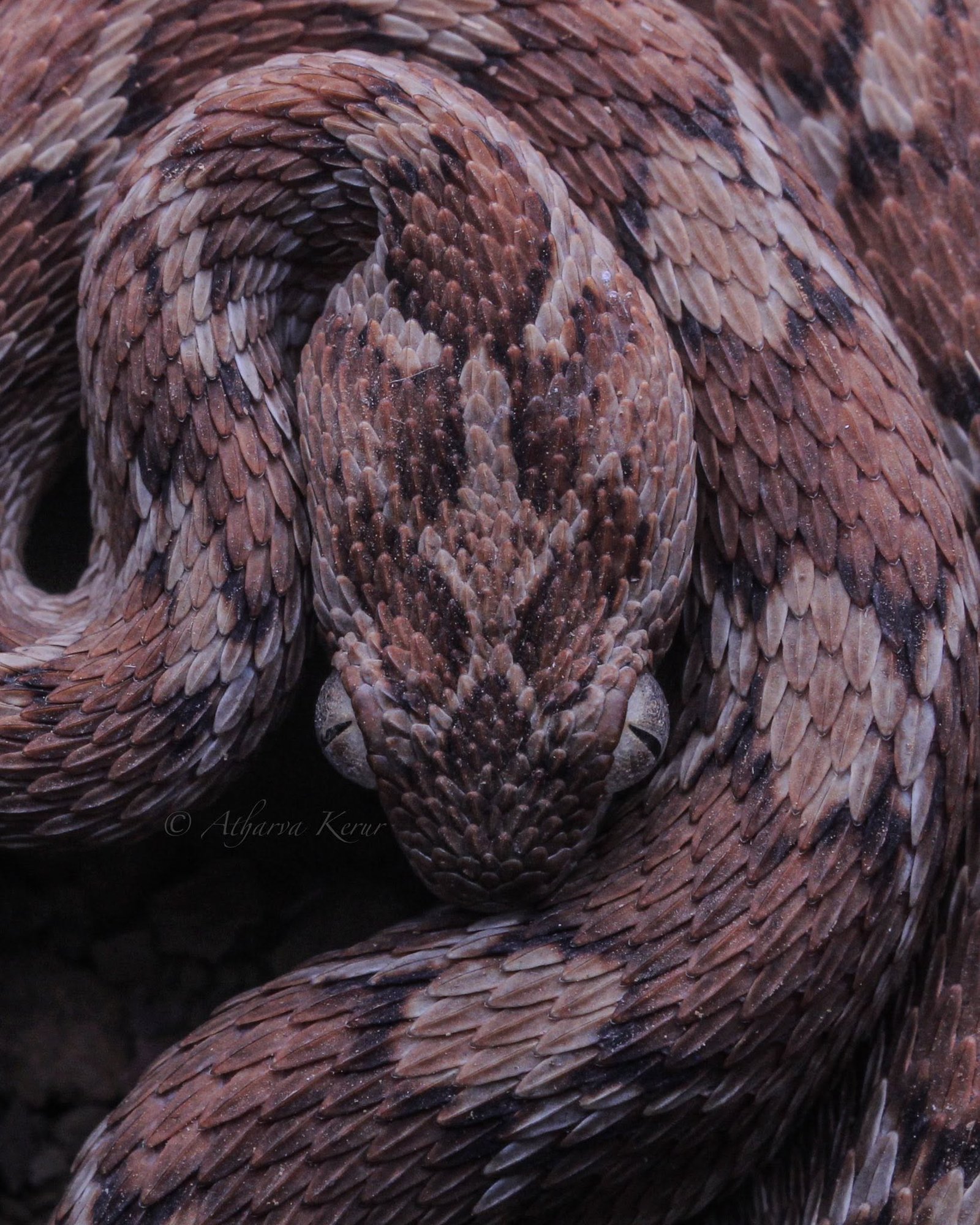
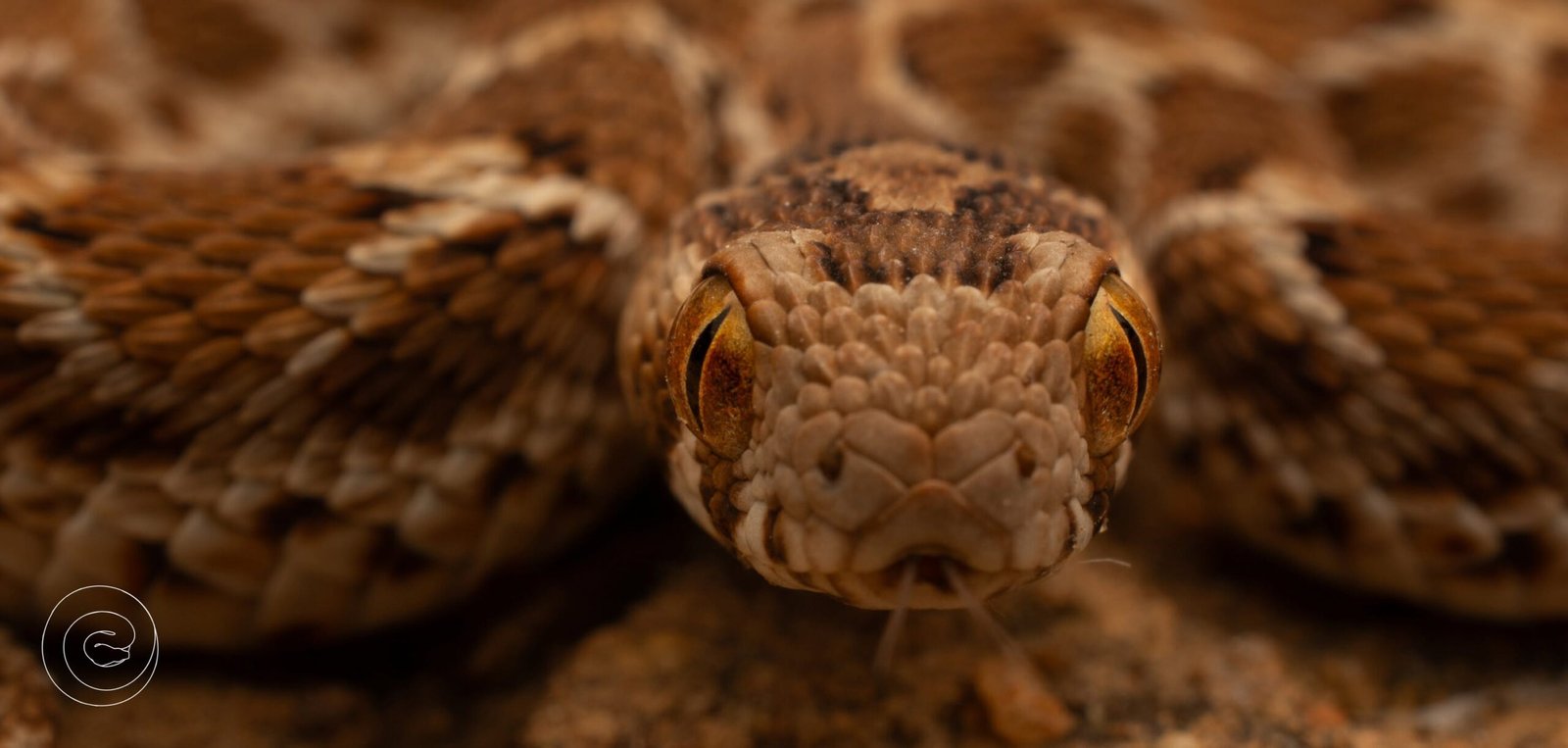
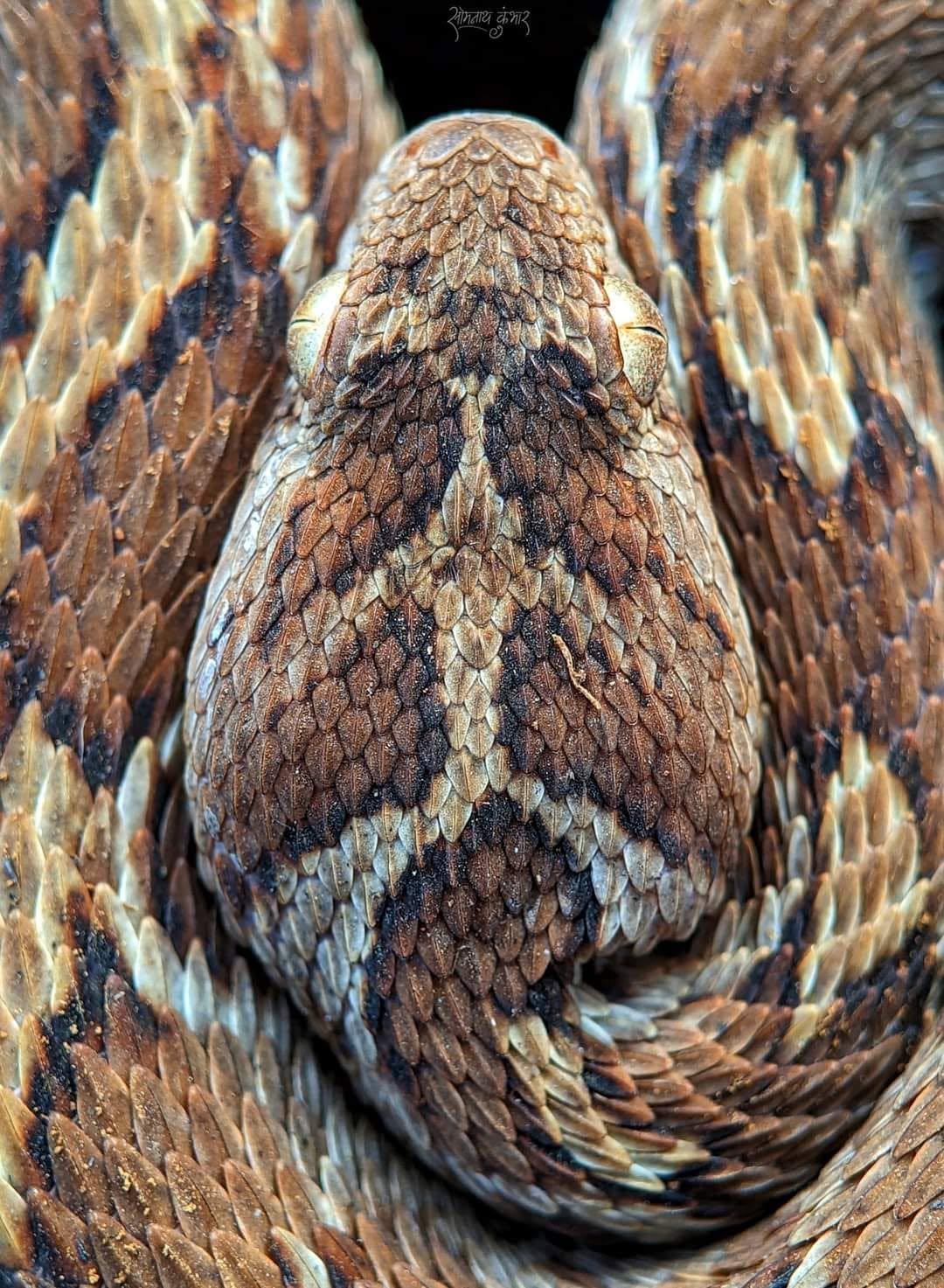
- Head shapeThe head of Echis carinatus (Saw-scaled vVper) is distinct from the neck, and generally described as pear-shaped, triangular, or flattened.
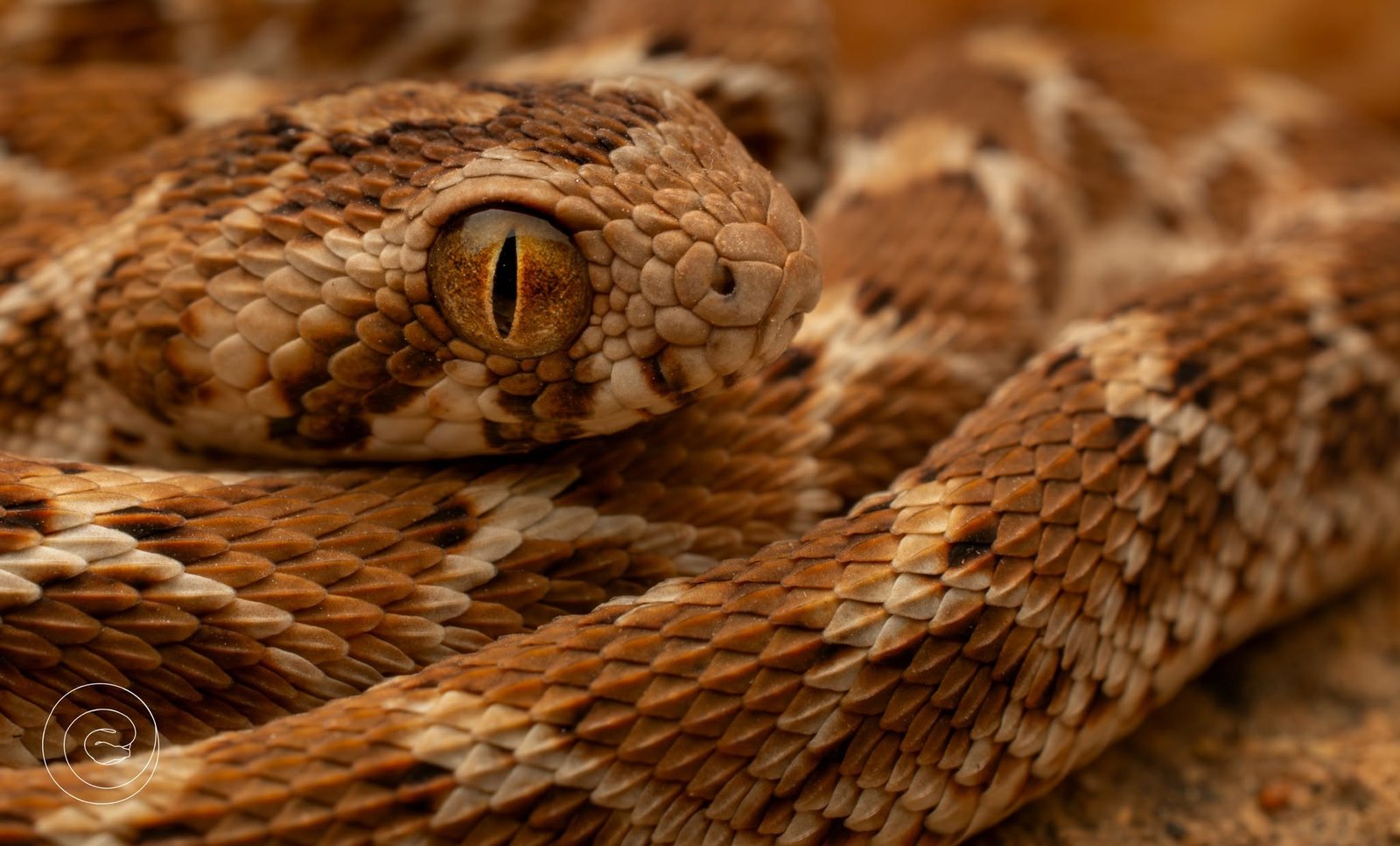
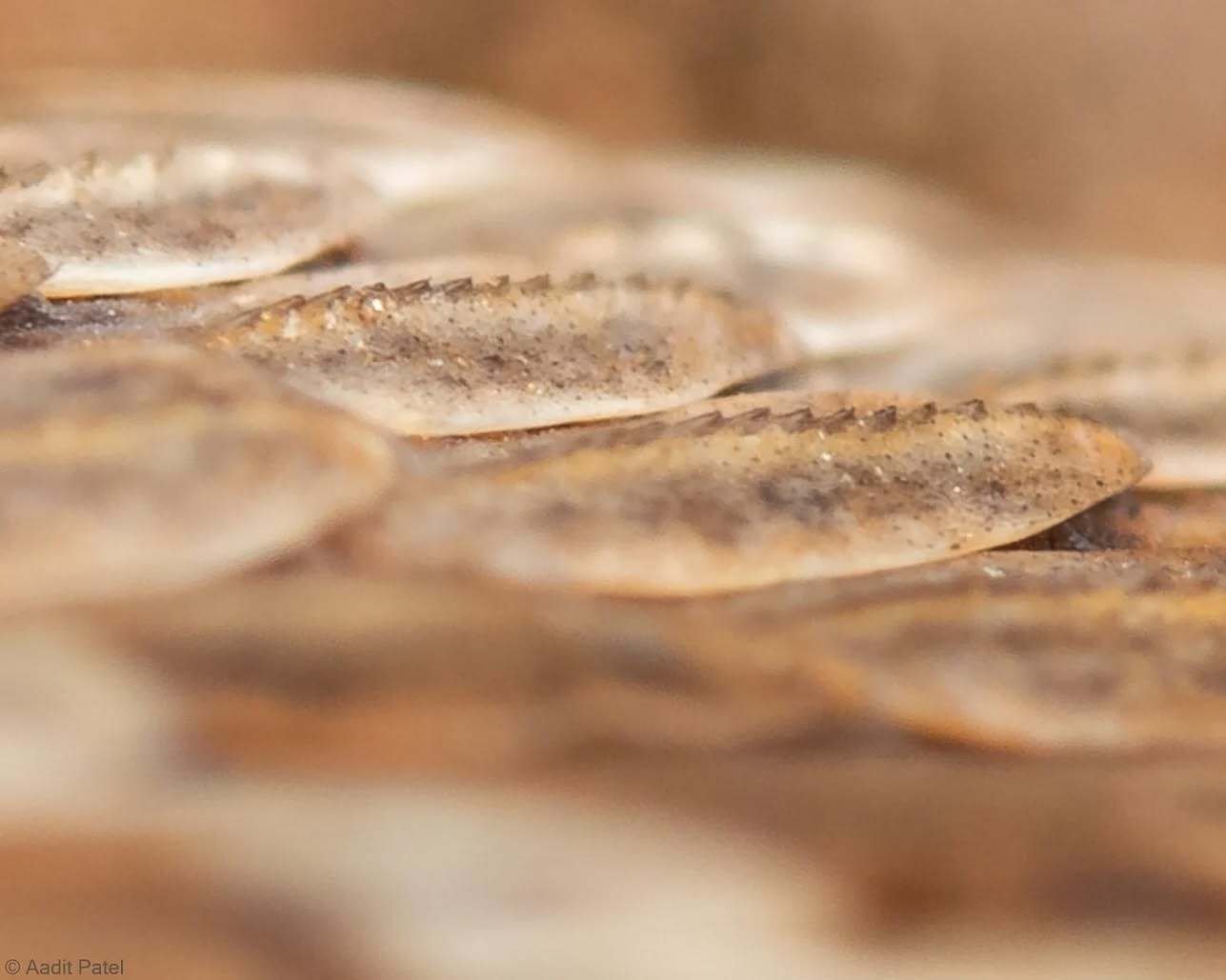
- Scale patternThe scale pattern and scalation of the Saw-scaled Viper (Echis carinatus) feature a distinctive arrangement designed for camouflage and a specialized warning mechanism.
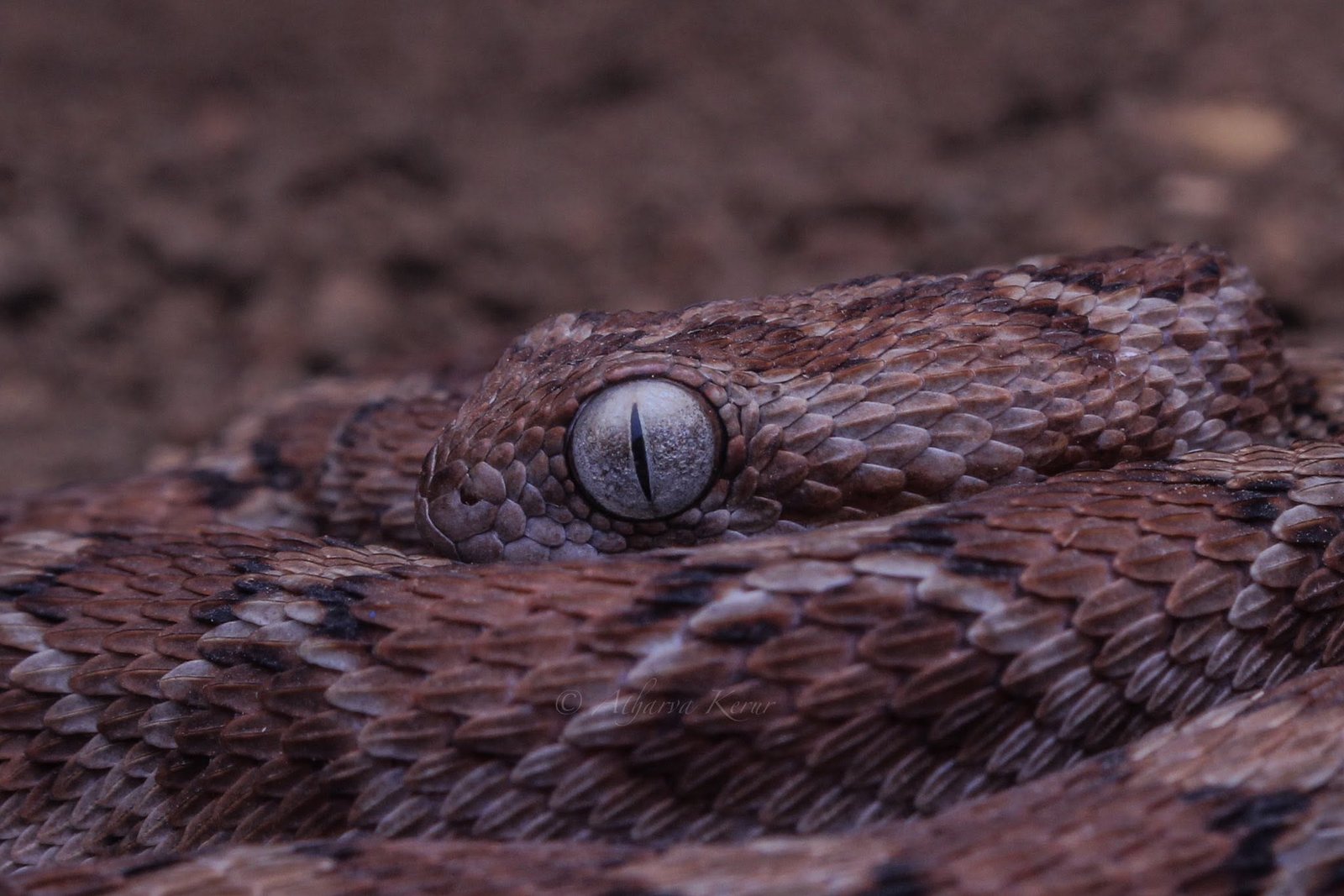
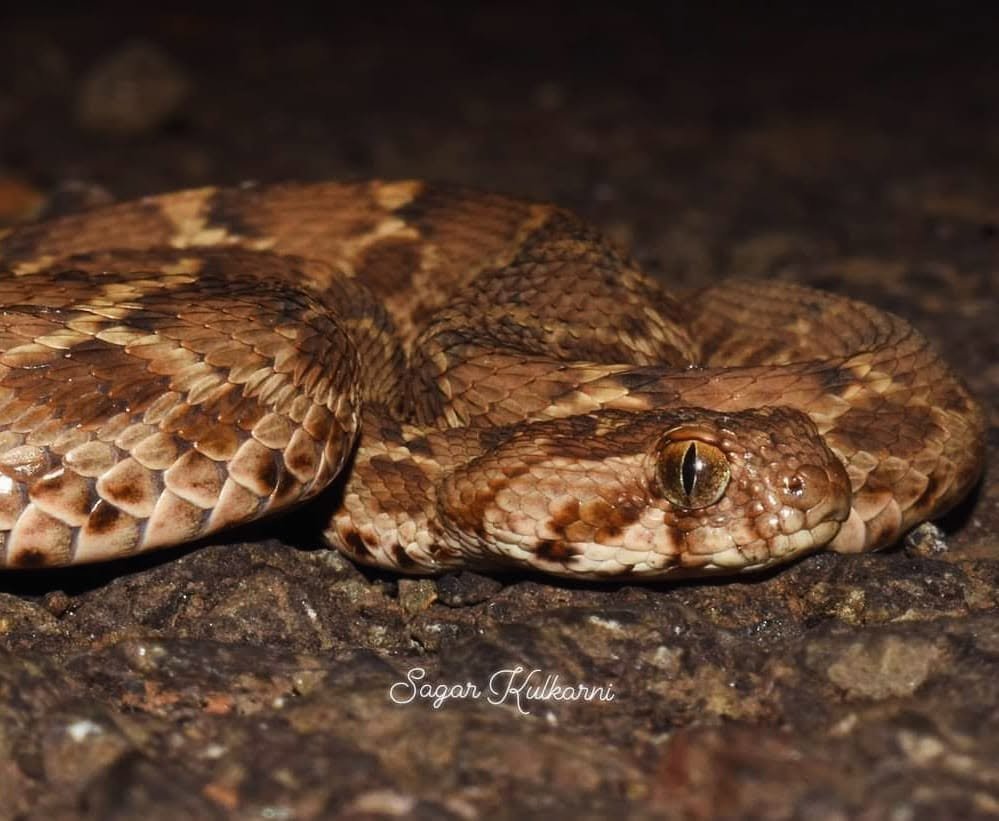
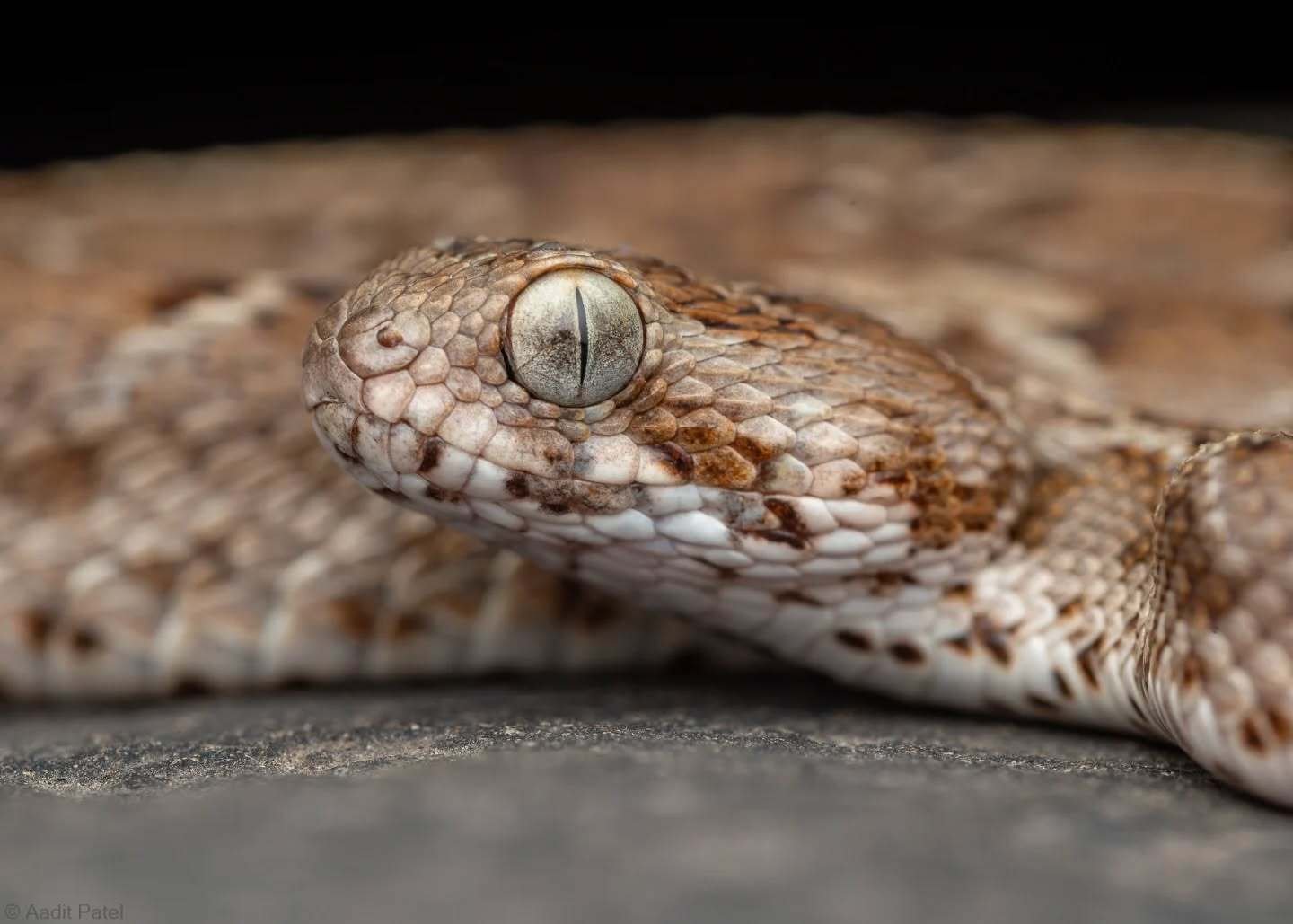
- Eye characteristicsThe eyes of the Saw-scaled Viper (Echis carinatus) are medium-to-large in size, feature vertical pupils, and are surrounded by a ring of small scales.
- Neck markingsThe neck of Echis carinatus (The Saw-scaled Viper) does not feature a single, isolated mark; instead, it serves as the crucial transition point between a highly distinct head pattern and a unique dorsolateral body pattern.
- Average lengthThe average total length of Echis carinatus (Saw-scaled Viper or Carpet Viper) is 38 to 60 cm (15 to 24 inches), with a typical average around 40 cm (16 inches). • Size Breakdown: • Typical Adult Length: 38–60 cm (15–24 in). • Average Length: ~40 cm (1 ft 4 in). • Maximum Length: Up to 80 cm (2 ft 7 in), though rare individuals can reach around 90 cm. • Newborn Length: 8 to 12 cm at birth.
- Tail characteristicsThe tail of Echis carinatus (Saw-scaled Viper) is characterized by the following features: • Length: Short and thin relative to the stout, compact body. • Tip: Ends in a distinct, pointed tip. • Scalation: Covered with rough, strongly keeled (ridged) scales matching the texture of the body. • Subcaudals: Features undivided subcaudal scales (single-row scales on the underside of the tail), typically ranging from 27 to 34 depending on the subspecies/region (e.g., E. c. sochureki has roughly 27–34 undivided subcaudals).
- Distinctive markingsThe Saw-scaled Viper (Echis carinatus) is a highly venomous snake native to parts of the Middle East, Central Asia, and the Indian subcontinent. It is easily recognized by its dry, rough appearance and specialized patterns designed for concealment.
Identification Warning
Taxonomy
| Classification | Details |
|---|---|
| Kingdom | Animalia |
| Phylum | Chordata |
| Class | Reptilia |
| Order | Squamata |
| Family | Viperidae |
| Genus | Echis |
| Species | E. carinatus |
Venom Information
Venom Status
Venomous
Medical significance depends on species, bite circumstances, venom dose and treatment availability.
Venom Type
- HemotoxicThe venom of Echis carinatus (Saw-scaled Viper) is primarily hemotoxic, featuring potent components that aggressively disrupt blood clotting and cause severe tissue damage. • Key Venom Characteristics: • Type: Hemotoxic with strong procoagulant properties. • Primary Components: High concentrations of snake venom metalloproteinases (SVMPs) (particularly class III), phospholipases A2 (PLA2), snake venom serine proteases, disintegrins, and C-type lectins. • Key Active Enzyme: Ecarin, a procoagulant metalloprotease that converts prothrombin directly into meizothrombin. • Clinical Effects of Envenomation: • Coagulopathy: Causes severe systemic blood coagulation abnormalities, consumption coagulopathy, and spontaneous bleeding. • Local and Systemic Damage: Leads to rapid local swelling, intense pain, severe tissue necrosis (sometimes aided by neutrophil extracellular traps), acute renal failure, and hypotension. • Medical Uses: Components from its venom have been utilized in pharmacological research and drug development, such as echistatin and ecarin.
Venom Delivery
- Solenoglyphous (Hinged) FangsThe venom delivery mechanism of Echis carinatus (the Saw-scaled Viper) relies on a specialized solenoglyphous (hinged) fang apparatus typical of vipers.
Medical Importance
The Saw-scaled Viper (Echis carinatus) is a highly venomous snake of major medical significance because it causes more snakebite deaths worldwide than almost any other snake genus.
•Clinical Manifestations and Envenoming•
• Venom-Induced Consumptive Coagulopathy (VICC):
The venom contains potent prothrombin activators (such as ecarin and carinactivase) that trigger massive clotting system activation, leading to severe depletion of clotting factors, incoagulable blood, and uncontrolled internal or external bleeding.
• Hemorrhage:
Systemic and local bleeding can occur, including severe complications like intracerebral hemorrhage (brain bleeding), gastrointestinal bleeding, and bruising.
• Acute Kidney Injury (AKI):
Renal impairment and acute renal failure frequently develop due to severe hypotension, intravascular hemolysis, and disseminated intravascular coagulation (DIC).
• Local Tissue Damage:
Bites cause intense localized pain, swelling, tenderness, and sometimes tissue necrosis or compartment syndrome at the bite site.
• Rare Manifestations:
Cardiotoxicity (such as acute myocardial infarction or bradycardia) and thrombotic microangiopathy are rare but documented systemic complications.
•Medical and Pharmacological Value•
• Antivenom Target:
It is a primary target for polyvalent snake antivenoms, though efficacy can vary by region and species.
• Venom-Derived Drugs:
Components of its venom have been instrumental in medical research and drug development:
• Ecarin:
Used as a primary reagent in the ecarin clotting time (ECT) test to monitor anticoagulant therapy (such as hirudin).
• Echistatin:
A disintegrin derived from its venom that acts as an anticoagulant and bone resorption inhibitor.
• Tirofiban:
An antiplatelet medication modeled from viper venom components used to reduce thrombotic cardiovascular events in acute coronary syndrome.
Source: Source: National Institutes of Health (NIH) | (.gov) https://share.google/6hJZzSr7ZoHclXVHX Source: National Institutes of Health (NIH) | (.gov) https://share.google/iwuWC7iH7aUmlYigx Source: ResearchGate https://share.google/I2MG0ZqPB5CdRyb8t Source: National Institutes of Health (.gov) https://share.google/d0GV2gaVdwIsuzidR
Physical Characteristics
Size
- Average length
- The average total length of Echis carinatus (Saw-scaled Viper or Carpet Viper) is 38 to 60 cm (15 to 24 inches), with a typical average around 40 cm (16 inches). • Size Breakdown: • Typical Adult Length: 38–60 cm (15–24 in). • Average Length: ~40 cm (1 ft 4 in). • Maximum Length: Up to 80 cm (2 ft 7 in), though rare individuals can reach around 90 cm. • Newborn Length: 8 to 12 cm at birth.
- Maximum recorded
- 980 mm (3 feet 3 inches) from nose to tail
- Weight
- The adult Echis carinatus (saw-scaled viper) typically weighs between 0.25 and 1 lb (roughly 113 to 450 grams), with typical adult body mass averaging around 142 g (5 oz).
Appearance
- Body color
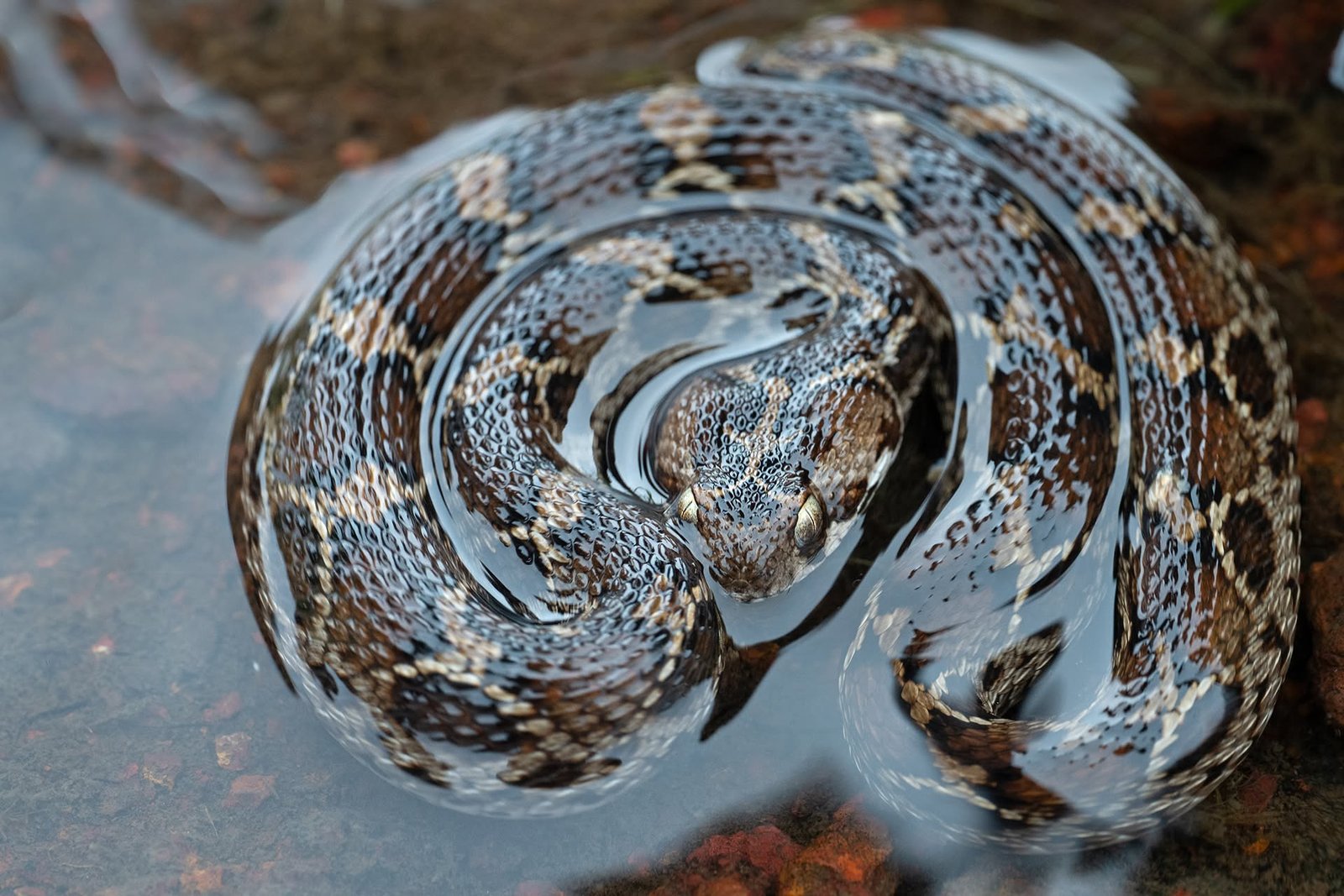
- The body color of Echis carinatus (The Saw-scaled Viper) features a ground color of Pale Buff, Grayish, Reddish, Olive, or Pale Brown.
- Pattern
- Dorsal Pattern (Top and Sides) • Mid-dorsal markings: A series of whitish or cream-colored spots edged with dark brown. • Lateral markings: Wavy white bows, lines, or zig-zags running dorsolaterally along the flanks. • Head pattern: A distinct whitish or light cruciform (cross-like), trident, or arrow-shaped mark on the top of the head, with a faint stripe running from the eye to the angle of the jaw.
- Head
- The head of Echis carinatus (Saw-scaled vVper) is distinct from the neck, and generally described as pear-shaped, triangular, or flattened.
- Scales
- The scale pattern and scalation of the Saw-scaled Viper (Echis carinatus) feature a distinctive arrangement designed for camouflage and a specialized warning mechanism.
- Eyes
- The eyes of the Saw-scaled Viper (Echis carinatus) are medium-to-large in size, feature vertical pupils, and are surrounded by a ring of small scales.
- Tail
- The tail of Echis carinatus (Saw-scaled Viper) is characterized by the following features: • Length: Short and thin relative to the stout, compact body. • Tip: Ends in a distinct, pointed tip. • Scalation: Covered with rough, strongly keeled (ridged) scales matching the texture of the body. • Subcaudals: Features undivided subcaudal scales (single-row scales on the underside of the tail), typically ranging from 27 to 34 depending on the subspecies/region (e.g., E. c. sochureki has roughly 27–34 undivided subcaudals).
Sexual Dimorphism
- Male
- Male sexual dimorphism in the Saw-scaled Viper (Echis carinatus) is characterized by a smaller overall body size, a proportionally longer tail, more sub-caudal scales, and fewer ventral scales compared to females.
- Female
- Female and male Saw-scaled Vipers (Echis carinatus) show distinct differences in body size, tail proportions, and scale counts.
Habitat & Distribution
Geographic Distribution
- The Echis carinatus (commonly known as the Indian Saw-scaled Viper or Carpet Viper) inhabits dry, arid, and semi-arid environments across parts of the Middle East, Central Asia, and the Indian subcontinent.
- • Primary Habitats:
- • Arid Landscapes:
- Deserts, sandy plains, gravel plains, dry shrublands, rocky slopes, and wadis.
- • Vegetation Zones:
- Grasslands, thorn scrub, and dry or moist deciduous forests.
- • Human-Altered Areas:
- Agricultural fields, rural gardens, and the edges of human settlements, where they often hide under woodpiles, bricks, and foundation cracks.
- • Daytime Shelters & Microhabitats:
- • Burrows and Fissures:
- Deep mammal burrows, rock crevices, and fallen rotted logs.
- • Sandy Cover:
- Often buries itself in loose sand, leaving only its head exposed.
- • Arboreal Behavior:
- Frequently climbs into low bushes and shrubs (up to 2 meters high), especially after rains or on humid nights.
- • Geographic Distribution:
- • Regions:
- Found across India, Pakistan, Sri Lanka, Afghanistan, Iran, UAE, Oman, Qatar, Turkmenistan, Uzbekistan, and Tajikistan.
Habitat
- Forest
- Grassland
- Agricultural land
- Desert
- Urban / peri-urban areas
Elevation: The elevation range of Echis carinatus (Saw-scaled Viper) extends from sea level up to approximately 1,500 to 1,982 meters (about 4,900 to 6,560 feet) in mountainous or high-altitude regions. •Elevation Details• Lowest Elevation: Sea level (0 meters) in coastal and plain habitats. Typical Range: Commonly found across low- to mid-elevation plains, dry scrublands, and rocky outcrops. Highest recorded elevation: Up to 1,500 meters across general distributions and up to 1,982 meters (6,500+ feet) in specific regions like Balochistan.
Behavior
Activity
- Crepuscular - NocturnalEchis carinatus (the Saw-scaled Viper) is crepuscular and nocturnal (active during twilight and at night), though it can occasionally exhibit daytime activity depending on weather and temperature. • Nighttime Behavior: They primarily hunt and forage during cooler evening and nighttime hours. • Daytime Rest: During the heat of the day, they hide in mammal burrows, rock fissures, under fallen logs, or bury themselves in sand. • Weather Shifts: While mostly nocturnal, they may shift to crepuscular or daytime movement in cooler weather or become very active after rains and on humid nights.
Diet
- Small Mammals - Reptiles & Amphibians - Arthropods - Birds - Smaller SnakesThe Saw-scaled Viper (Echis carinatus) is a generalist and opportunistic ambush predator with a diverse carnivore diet. • Main Prey Items: • Small Mammals: Rodents and mice. • Reptiles and Amphibians: Lizards and frogs. • Arthropods: Scorpions, centipedes, and large insects. Notably, Echis carinatus has a high resistance to scorpion venom, allowing it to safely eat highly venomous scorpions. • Other Animals: Small birds and occasionally other smaller snakes.
Defensive Behavior
The Saw-scaled Viper (Echis carinatus) is known for its highly irritable temperament and rapid, aggressive response when threatened.
• Key Defensive Behaviors:
• Stridulation (“Sawing” Sound):
The snake coils its body into continuous C-shaped or figure-eight loops and rubs its specialized, serrated, keeled lateral scales (angled at 45 degrees) against one another. This friction produces a loud, hissing or sizzling warning sound.
• Coiled Striking Posture:
It adopts a tight double-coil or figure-eight posture, keeping its head poised in the center ready to lunge forward like a released spring.
• High Readiness to Strike:
Unlike more shy species, Echis carinatus does not hesitate to strike repeatedly and with lightning speed if an intruder comes too close.
• Sidewinding Locomotion:
When retreating or moving quickly across loose sand or hot surfaces, it uses sidewinding to minimize body contact with the ground and maintain high speed.
Hunting Behavior
• Hunting and Feeding Behavior:
• Tactics:
It is a nocturnal and crepuscular sit-and-wait (ambush) predator that often stays hidden under rocks, logs, or partially buried in sand.
• Captive Diet:
In terrariums, they are commonly transitioned to pre-killed rodents matched to an appropriate size, fed roughly every 1 to 2 weeks depending on age and metabolism.
Seasonal Behavior
The seasonal behavior of Echis carinatus (The Saw-scaled Viper) is highly dictated by ambient temperature, rainfall patterns, and the activity of its prey. As a poikilothermic (cold-blooded) animal inhabiting hot, arid, and semi-arid environments across South Asia and the Middle East, its physiological markers, locomotion, and hunting habits shift distinctively throughout the year.
The species transitions through three major seasonal behavioral phases:
1. Monsoon & Rainy Season (Peak Activity):
The rainy season triggers the highest surge in surface activity and human interaction.
• Arboreal Behavior:
While primarily a terrestrial snake, Echis carinatus exhibits unique climbing behavior when it rains. Up to 80% of the adult population will climb into bushes and shrubs, sometimes up to 2 meters off the ground, to escape flooded burrows and water-saturated soils.
• Foraging & Hydration:
High humidity and rain increase the activity of their prey (insects, frogs, and rodents). Vipers utilize this abundance to forage heavily, relying on their sit-and-wait ambush style.
• Bite Frequency:
Due to increased surface movement and agricultural activity during the monsoon, the frequency of snakebites spikes significantly during these months.
2. Summer & Warmer Months (Nocturnal Shift & Mating):
During intense summer heat, the viper’s daily schedule shifts to prevent overheating.
• Nocturnal Foraging:
Daily surface activity restricts almost entirely to twilight (crepuscular) and nighttime hours. During the scorching day, they remain strictly hidden under rocks, in deep mammal burrows, or buried in loose sand with only their heads exposed.
• Mating Season:
Breeding occurs during the warmer months. Males engage in courtship and competition. Depending on the geographic region, females later give birth to live young (ovoviviparous) or lay eggs toward the end of summer.
• Venom Variation:
Studies show that physiological and metabolic rates peak in the summer. Consequently, venom yield is highest during summer months, and adult males generally produce more dry venom weight than females during this active phase.
3. Winter & Cooler Months (Brumation):
As temperatures drop, Echis carinatus undergoes significant behavioral and physiological suppression to conserve energy.
• Brumation:
In colder northern ranges (such as Pakistan, Northern India, and Central Asia), the snake enters a state of brumation (the reptilian equivalent of hibernation). They retreat to deep rock fissures or underground shelters for extended periods.
• Diurnal Flexibility:
During milder winter days or in transitional cooler periods, their daily clock becomes more flexible. They may switch from nocturnal hunting to crepuscular or even daytime (diurnal) basking and movement to exploit the warmest hours of the day.
• Physiological Drops:
Their metabolic rate slows dramatically. Studies show that body weight averages decrease in winter, and blood hemoglobin profiles drop compared to their elevated summer baselines.
Hibernation / Brumation
As an ectothermic (cold-blooded) reptile, Echis carinatus (The Saw-scaled Viper) undergoes brumation rather than true hibernation.
While older scientific literature or general encyclopedias often use the blanket term “hibernation”, the correct biological mechanism for this species is brumation.
Reproduction
Reproductive Overview
- Reproductive method
- Ovoviviparous
- Mating season
- Mating and Breeding Timeline: • Fertilization: Reproduction occurs via internal fertilization. During the breeding season, the male uses one of his two reproductive organs (called hemipenes) to mate with the female. • Seasonality: In southern Asian populations (like northern India), mating generally takes place during the winter. • Gestation & Birth: Females carry the developing embryos for roughly 3 to 4 months. Live young are typically born during the warmer months, between April and August.
- Clutch / litter size
- • Live Births: A single live-bearing litter typically yields between 3 to 15 neonates, though exceptional litters can reach up to 23 young. The newborns measure about 11.5 to 15.2 cm in length and are fully independent and venomous from birth. • Egg Clutches: Egg-laying populations typically lay clutches containing 6 to 20 eggs.
- Incubation period
- The concept of an "incubation period" for the Saw-scaled Viper (Echis carinatus) depends entirely on the specific population and reproductive mode, as this species is highly unique. • Live-Bearing (Ovoviviparous) Populations: The primary populations of Echis carinatus found in the Middle East and southern Asia (including India and Pakistan) are live-bearing. Instead of laying eggs, females retain the eggs internally and give birth to live young. Their gestation period lasts roughly several months; mating typically occurs in the winter months (such as January to February), and females give birth from April through August. • Egg-Laying (Oviparous) Populations: Some individual subspecies or distinct geographical lineages display oviparous behavior. For these egg-laying variants, the actual external egg incubation period lasts between 50 and 80 days, heavily dependent on local environmental temperatures and moisture.
Breeding Behavior
The breeding behavior of Echis carinatus (the Saw-scaled Viper) features distinct traits depending on the region and subspecies:
•Mating System & Courtship•
• Polygynandry:
Both males and females often mate with multiple partners.
• Seasonality:
Mating typically occurs during the cooler or winter months (such as in northern India), though it can vary by local climate.
• Competition:
Males may engage in courtship and physical competition or ritualized combat over access to females.
•Reproductive Mode (Ovovivparity vs. Oviparity)•
• Live-Bearing (Ovoviviparous):
The nominal Echis carinatus (such as populations in India) is ovoviviparous, meaning females retain the developing eggs inside their bodies and give birth to live young.
• Subspecies Variation:
Not all populations share this trait; for instance, Echis carinatus sochureki is known to be oviparous (egg-laying).
•Gestation and Litters•
• Gestation Period:
Lasts roughly 3 to 4 months.
• Birth Timing:
In northern India, live young are typically born from April through August.
• Litter Size:
A standard litter contains about 3 to 15 young, though maximum records note up to 23 offspring in some cases.
• Offspring Independence:
Newborns measure roughly 115 to 152 mm in length, are fully venomous, precocial, and capable of hunting independently right away.
Juvenile Characteristics
Juveniles of the Saw-scaled Viper (Echis carinatus) are born remarkably well-developed and function as mini-versions of adults. Unlike some snake species that undergo dramatic ontogenetic color transitions, Echis carinatus young largely resemble adults from birth.
• The primary juvenile characteristics include:
📐 Size and Morphometrics at Birth:
• Length:
Newborn neonates measure between 115 and 152 mm (4.5 to 6 inches) in total length.
• Mass:
Hatching/birth mass typically averages around 3.68 grams (0.13 oz).
• Proportions:
They have a proportionally larger, pear-shaped head compared to their thin, cylindrical bodies, which rapidly fills out as they mature.
🎨 Coloration and Patterning:
• Cryptic Matching:
They are born with the exact same camouflaging, earth-toned ground colors (buff, grayish, olive, or light brown) as adults.
• Markings:
Even as neonates, they clearly display the whitish, dark-rimmed mid-dorsal spots and undulating dorsolateral white loops.
• Head Signatures:
The definitive cruciform (cross-shaped) or trident marking on top of the head is fully formed and visible at birth.
🛡️ Defensive and Behavioral Traits:
• Precocial Independence:
Echis carinatus young are precocial (mature and entirely mobile from birth). They receive zero maternal care and must hunt and defend themselves immediately.
• Scale Rubbing (Stridulation):
Neonates possess the specialized, obliquely arranged serrated flank scales. They will immediately form a “C-coil” and rub these scales together to produce a distinctive, sizzling warning sound if threatened.
• Locomotion:
They utilize sidewinding locomotion to move effectively over loose sand and hot substrates right out of the egg/sac.
🧪 Venom and Diet:
• Potency:
Juvenile Echis carinatus are fully venomous from birth. While an individual neonate yields a much smaller quantity of venom than an adult, its bite is medically significant and highly dangerous.
• Ontogenetic Changes:
Genus Echis exhibits biochemical changes in its venom as it grows. Neonates generally possess higher procoagulant activity targeting specific clotting factors (like Factor VII and X) to rapidly paralyze smaller ectothermic prey (like arthropods, scorpions, and centipedes), whereas adult venom shifts slightly to accommodate larger vertebrate prey like rodents.
Human Interaction & Safety
If Encountered
- Keep a safe distance.
- Do not attempt to catch or kill the snake.
- Keep children and pets away.
- Contact a trained local wildlife / snake-rescue service where available.
- 𝗛𝗶𝗴𝗵 𝗖𝗼𝗻𝗳𝗹𝗶𝗰𝘁 𝗥𝗶𝘀𝗸: The Indian Saw-scaled Viper (Echis carinatus) is highly aggressive and responsible for more human snakebite fatalities globally than almost any other snake.
- 𝗛𝗮𝗯𝗶𝘁𝗮𝘁𝗶𝗼𝗻 𝗢𝘃𝗲𝗿𝗹𝗮𝗽: They frequently hide in heavily populated rural areas, farms, and around homes, increasing the likelihood of accidental encounters.
- 𝗔𝘂𝗱𝗶𝘁𝗼𝗿𝘆 𝗪𝗮𝗿𝗻𝗶𝗻𝗴: When threatened, they loop their bodies into S-shapes and rub their rough, keeled scales together to create a distinct, loud "sizzling" or "sawing" warning sound.
- 𝗦𝘁𝗿𝗶𝗸𝗶𝗻𝗴 𝗕𝗲𝗵𝗮𝘃𝗶𝗼𝗿: They do not hesitate to strike repeatedly with extreme speed and enthusiasm, sometimes jumping forward nearly the full length of their body.
- 𝗛𝗶𝗴𝗵𝗹𝘆 𝗟𝗲𝘁𝗵𝗮𝗹 𝗩𝗲𝗻𝗼𝗺: They yield an average of 18 mg of dry venom, yet the estimated lethal dose for an adult human is only 5 mg.
- 𝗦𝗲𝘃𝗲𝗿𝗲 𝗛𝗲𝗺𝗼𝘁𝗼𝘅𝗶𝗰𝗶𝘁𝘆: The venom disrupts blood-clotting mechanisms, causing rapid tissue necrosis, internal bleeding, hematemesis (vomiting blood), and hypovolemic shock.
- 𝗢𝗿𝗴𝗮𝗻 𝗙𝗮𝗶𝗹𝘂𝗿𝗲: Envenomation frequently causes acute kidney injury (AKI) and multi-organ failure within a few hours to days, which can lead to rapid cardiac arrest if untreated.
- 𝗝𝘂𝘃𝗲𝗻𝗶𝗹𝗲 𝗗𝗮𝗻𝗴𝗲𝗿: Young vipers are fully venomous from birth; even a juvenile can inject double the lethal dose required to kill an adult human.
- 𝗩𝘂𝗹𝗻𝗲𝗿𝗮𝗯𝗹𝗲 𝗚𝗿𝗼𝘂𝗽𝘀: Children and agricultural workers are at the highest risk, and individuals sleeping on floor mats are frequently bitten when accidentally rolling onto a hunting snake.
- 𝗣𝗿𝗼𝘁𝗲𝗰𝘁𝗶𝘃𝗲 𝗙𝗼𝗼𝘁𝘄𝗲𝗮𝗿: Never walk barefoot or in open sandals at night in dry, rocky, or scrub-forest environments where these snakes actively hunt.
- 𝗦𝗮𝗳𝗲 𝗛𝗮𝗻𝗱𝗹𝗶𝗻𝗴 𝗣𝗿𝗮𝗰𝘁𝗶𝗰𝗲𝘀: Always use caution when moving firewood, clearing brush, or lifting rocks where the snake's small size and camouflage make it virtually invisible.
- 𝗣𝗿𝗼𝗳𝗲𝘀𝘀𝗶𝗼𝗻𝗮𝗹 𝗠𝗮𝗻𝗮𝗴𝗲𝗺𝗲𝗻𝘁: Due to extreme danger, human handling must be restricted to professional relocation experts, researchers, or trained venom-extractors.
- 𝗖𝗿𝗶𝘁𝗶𝗰𝗮𝗹 𝗙𝗶𝗿𝘀𝘁 𝗔𝗶𝗱: If bitten, remain calm, immobilize the affected limb, remove tight jewelry or clothing, and avoid cutting, suctioning, or applying ice to the wound.
- 𝗨𝗿𝗴𝗲𝗻𝘁 𝗠𝗲𝗱𝗶𝗰𝗮𝗹 𝗔𝗰𝘁𝗶𝗼𝗻: Immediate hospitalization and the administration of specialized polyvalent antivenom within the first few hours are absolutely vital for survival.
Snakebite Information
If someone is bitten, seek emergency medical care immediately.
Do not attempt to suck out venom, cut the wound, or apply a tourniquet unless specifically directed by medical professionals.
Similar Species
| Species | Difference |
|---|---|
| 1• Echis carinatus | |
| (Saw-scaled Viper) | |
| Endemic to Asia, spanning dry regions across the Middle East, Central Asia, and the Indian subcontinent. | |
| 2• Echis pyramidum | |
| (North-east African Carpet Viper) | |
| Widely distributed across parts of North Africa, East Africa, and the Middle East; historically confused or grouped closely with E. carinatus. | |
| 3• Echis coloratus | |
| (Painted Saw-scaled Viper) | |
| Found in rocky and mountainous areas of the Middle East (including parts of Oman, Egypt, and Israel), notable for a more colorful or reddish/orange-gray patterning. | |
| 4• Echis ocellatus | |
| (Ocellated Saw-scaled Viper) | |
| Native to West Africa, famous for distinctive ocellated (eye-like) dorsal markings and responsible for a high burden of snakebite envenomation in that region. | |
| 5• Echis omanensis | |
| (Oman Saw-scaled Viper) | |
| Restricted to the Hajar Mountains in northern Oman and the UAE, occupying rocky microhabitats near E. carinatus lowlands. | |
| 6• Echis borkini | |
| (Borkin's Carpet Viper) | |
| A smaller, localized species described within the Middle Eastern and Asian carpet viper group. | |
| 7• Echis hughesi | |
| (Hughes' Saw-scaled Viper) | |
| An endemic species found in restricted ranges in Somalia. | |
| 8• Echis jogeri | |
| (Joger's Saw-scaled Viper) | |
| Found in parts of West/Central Africa. | |
| 9• Echis khosatzkii | |
| (Khosatzki's Carpet Viper) | |
| Found in parts of the Middle East and Arabian Peninsula. | |
| 10• Echis leucogaster | |
| (White-bellied Carpet Viper) | |
| Distributed across parts of West Africa and Northwest Africa. | |
| 11• Echis megalocephalus | |
| (Cherlin's Saw-scaled Viper) | |
| Strictly endemic to a single location: Nokra Island (also spelled Nocra) in the Dahlak Archipelago, located in the Red Sea off the coast of Eritrea. | |
| 12• Echis romani | |
| (Roman's Carpet Viper) | |
| Distributed across parts of Central and West Africa, specifically ranging from central Nigeria through southwestern Chad, southern Niger, northern Cameroon, and northwestern Central African Republic, extending eastward toward southern Sudan. | |
| • Subspecies: | |
| 1: Echis carinatus sochureki | |
| (Sochurek's Saw-scaled Viper): | |
| Found in Pakistan, northern India, Afghanistan, Iran, and parts of the Arabian Peninsula. | |
| 2: Echis carinatus astolae | |
| (Astola Saw-scaled Viper) | |
| An insular subspecies endemic to Astola Island off the coast of southern Pakistan. | |
| 3: Echis carinatus multisquamatus | |
| (Multiscale Saw Scaled Viper) | |
| Found in parts of Central Asia and neighboring regions. | |
| 4: Echis carinatus sinhaleyus | |
| (Sri Lankan Saw-scaled Viper) | |
| Found in parts of Sri Lanka. | |
| 13• Echis tshiswapa | |
| 14• Echis steblini | |
| Other Species: | |
| 1 • Common Cat Snake | |
| (Boiga trigonata) | |
| Widely distributed across South Asia, Central Asia, and parts of the Middle East. | |
| •Resemblances (Similarities)• | |
| A. Color and Pattern: | |
| Both species feature a greyish-brown, tan, or yellowish-brown dorsal base color with similar zig-zag or wavy patterns down the back. | |
| B. Head Shape: | |
| Both possess a somewhat triangular head shape that mimics a dangerous viper. | |
| C. Geographic Distribution: | |
| They share overlapping habitats across dry, scrub, and rocky regions in India and South Asia. | |
| D. Defensive Posture: | |
| When threatened, both can coil tightly, rear back, and act defensively. | |
| •Differences• | |
| A. Head Markings: | |
| Common Cat Snake:Features a distinct "Y"-shaped or arrow-like mark on top of the head. | |
| Saw-scaled Viper: Features a characteristic fighter-plane or bird-foot-like light mark on the head. | |
| B. Eyes & Pupils: | |
| Common Cat Snake (Boiga trigonata): Has large golden eyes with vertical cat-like pupils. | |
| Saw-scaled Viper (Echis carinatus): Has smaller eyes with vertical pupils, surrounded by small scale-rings typical of vipers. | |
| C. Scales: | |
| Common Cat Snake: Has smooth scales (not glossy). | |
| Saw-scaled Viper: Has rough, heavily keeled scales that rub together to produce a distinctive sizzling or rasping warning sound. | |
| D. Body Proportions: | |
| Common Cat Snake: Slender, long, and laterally flattened. | |
| Saw-scaled Viper: Short, stout, and thick-bodied. | |
| E. Behavior: | |
| Common Cat Snake: Arboreal and shy, sluggish or hesitant to bite. | |
| Saw-scaled Viper: Very aggressive, fast-striking, and quick to defend itself when approached. | |
| F. Venom & Danger: | |
| Common Cat Snake: Mildly venomous (rear-fanged) and harmless to humans. | |
| Saw-scaled Viper: Highly venomous (potent hemotoxic venom) and responsible for significant snakebite morbidity. | |
| 2 • Desert Horned Viper | |
| (Cerastes cerastes) | |
| Widely distributed across arid and desert regions of North Africa and parts of the Middle East. | |
| Shares a similar small, stocky desert profile and sand-colored camouflage, though it is easily distinguished by the prominent "horn-like" scales above its eyes. | |
| 3 • Arabian Horned Viper | |
| (Cerastes gasperettii) | |
| Distributed across the Arabian Peninsula, the Middle East, and southwestern Iran. | |
| The key point of resemblance between Cerastes gasperettii (the Arabian Horned Viper) and a saw-scaled viper (genus Echis) centers on their specialized stridulation behavior and serrated lateral scales. | |
| When threatened, both snakes pull their bodies into tight, C-shaped loops and continuously rub their coils against each other. Because both species possess specialized, heavily keeled lateral scales with saw-like serrations, this mechanical friction produces a loud, rasping, or sizzling defense sound that strongly resembles a sharp hiss or a rattling noise. This specific mechanism of sound production is called saw-scaling or stridulation. | |
| Main Distinguishing Feature: | |
| The easiest way to tell them apart visually is that Cerastes gasperettii often features distinct horn-like scales (supraocular horns) directly above its eyes (though a small percentage can be hornless), whereas true saw-scaled vipers never possess horns. | |
| 4 • Rhombic Egg-Eater | |
| (Dasypeltis scabra) | |
| Broadly distributed across sub-Saharan Africa as well as parts of North Africa and the Middle East. | |
| This is a harmless snake that looks and acts like a saw-scaled viper. When threatened, it coils its body into a similar C-shape and rubs its keeled scales together to make the same dry, rasping warning sound. |
Conservation
IUCN Status
Least Concern (LC)Population Trend
Stable
Main Threats
- Habitat loss
- Human persecution
- Road mortality
- Illegal trade / collection
- Climate change
- Pollution / pesticides
Local Names
References
- Reginal Names:
- 𝗞𝗵𝗮𝗽𝗿𝗮, 𝗟𝘂𝗻𝗱𝗶, 𝗗𝗵𝗮𝗶 𝗚𝗵𝗮𝗿𝘆𝗮, 𝗝𝗮𝗹𝗲𝗯𝗶, 𝗞𝗿𝗼𝗻𝗱𝘆𝗮 𝗼𝗿 𝗞𝗿𝗼𝗻𝗱𝘄𝗮, 𝗚𝗼𝗼𝗻, 𝗟𝗮𝘁𝗸𝗮 𝗠𝗮𝗮𝗿, 𝗞𝘂𝗽𝗽𝘂𝗿, 𝗝𝗮𝗻𝗻𝗱𝗶, (𝗠ā𝗿-𝗲 𝗷𝗮'𝗳𝗮𝗿𝗶, 𝗛𝗮𝘆𝘆𝗮𝘁 𝗦𝗮𝘆𝘆𝗶𝗱 𝗗𝗮𝗸𝗵ī𝗹)
- علاقائی نام:
- (کھُپرا، لُنڈی، ڈھائی گھڑیا، جلیبی، کرونڈیا اور کرونڈوا، گون، لٹکہ مار,کوپور، جنڈی، (مار جعفری, حية سيد دخيل)